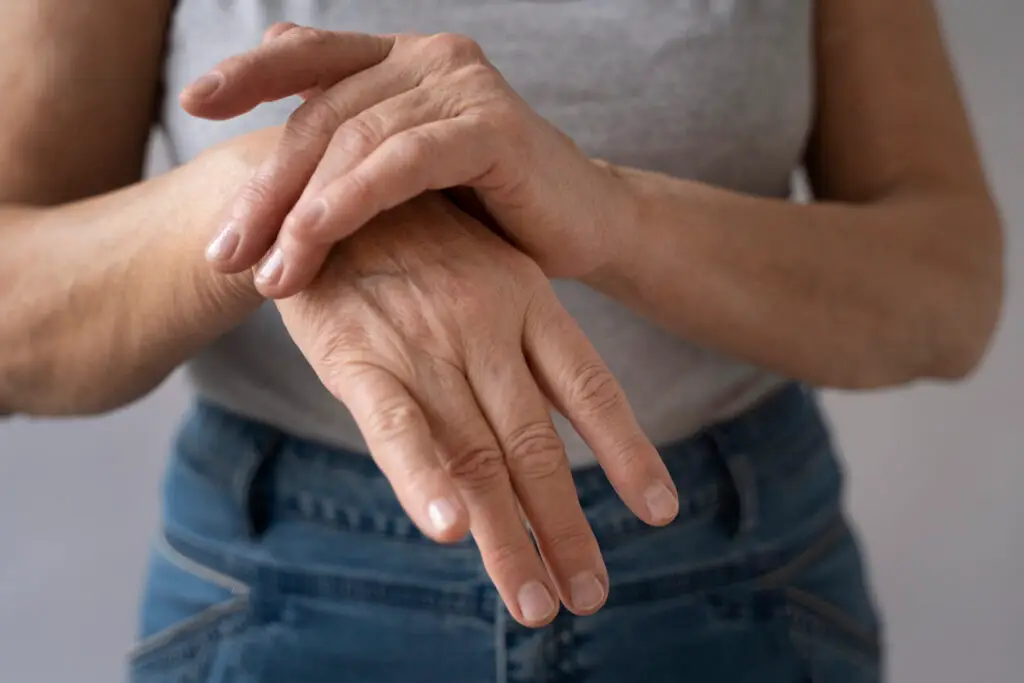
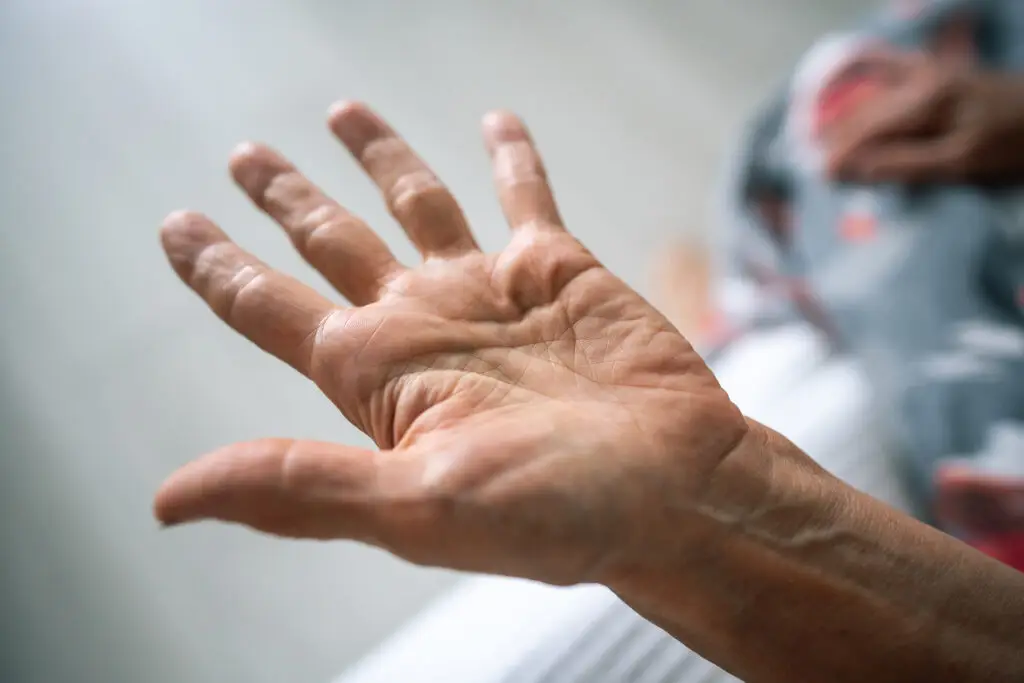
Dupuytren’s disease is a common, non-cancerous condition that affects the tissue beneath the skin of the palm. It often begins with small lumps and can gradually lead to finger contracture. This guide explains the stages, causes, and treatment options so you know what to expect and when to act.

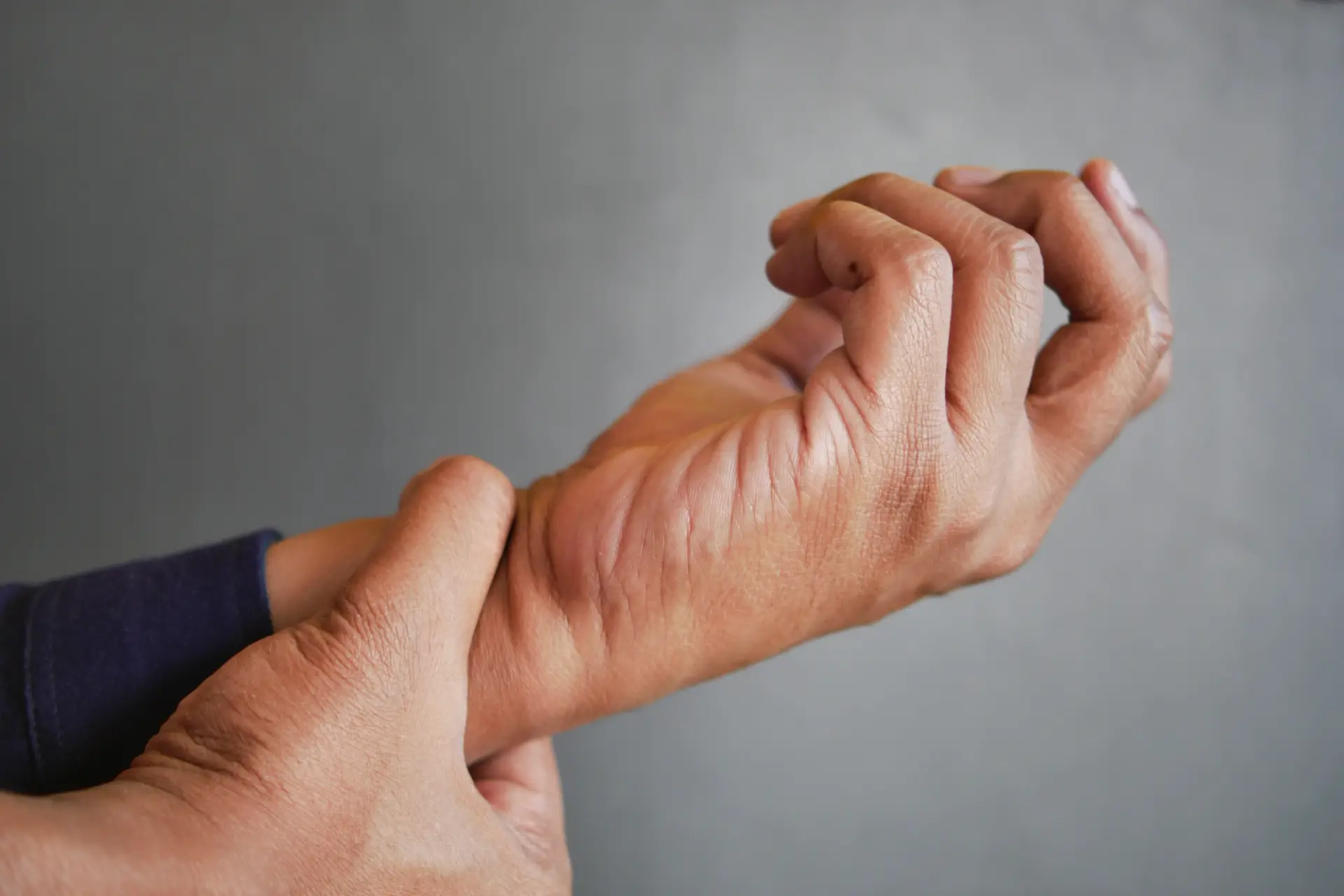
You may have noticed a lump in your palm and been told that you have Dupuytren’s disease. It is very common to feel unsure about what this means and what might happen next. This guide explains what Dupuytren’s disease is, what doctors mean when they talk about nodules, cords and contractures, and how the condition can change over time. By the end, you should have a clearer picture of what to expect and what can be done at each stage.
First, some reassurance. Dupuytren’s disease is a benign condition. This means it is not cancer, it does not spread, and it does not affect how long you live. However, it can affect how your hand works over time, so it helps to understand the condition properly and to recognise when it is changing.
What happens in Dupuytren's disease?
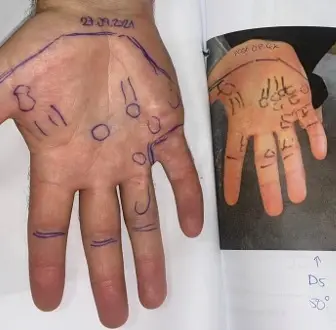
Dupuytren’s affects the layer of tissue just under the skin of your palm. Over time, this tissue thickens and forms a small lump, called a nodule. This often appears in line with the ring or little finger, although it can occur elsewhere in the hand.
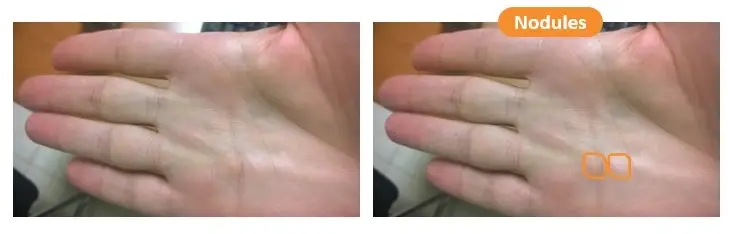
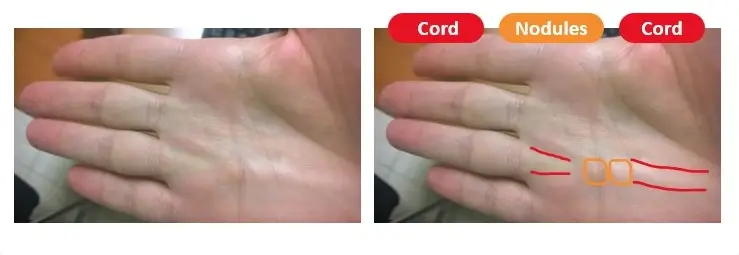
As the condition develops, this thickened tissue can form firm strands under the skin, called cords, which run along the palm and into the fingers.
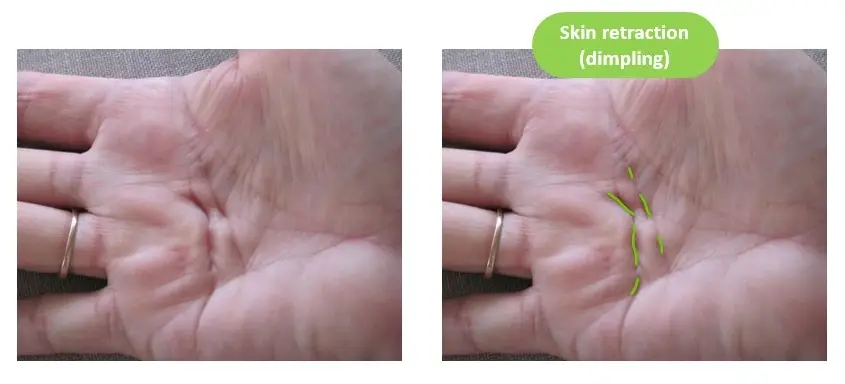
When these cords tighten, they begin to pull on the skin, which can cause dimpling and changes in the surface of the palm.
If the process continues, the tightening can start to affect the fingers themselves, making them harder to straighten fully.
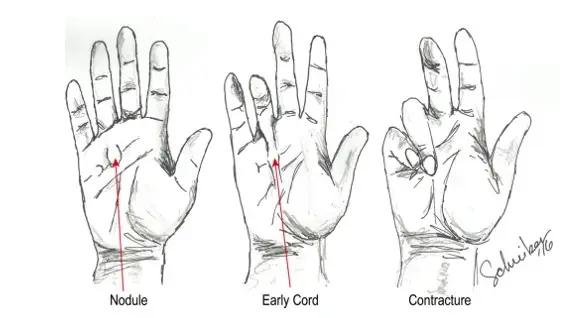
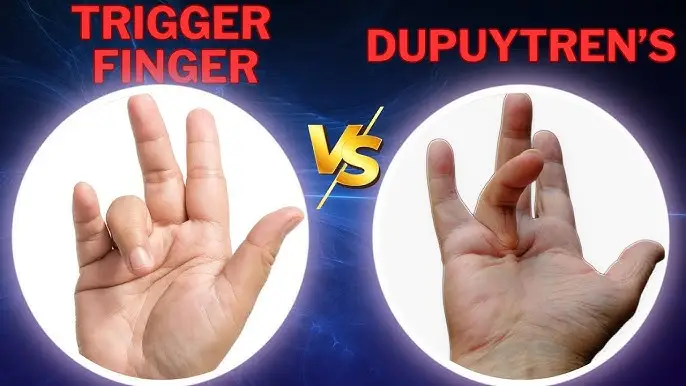
In more advanced cases, the fingers can become fixed in a bent position and can no longer be straightened.
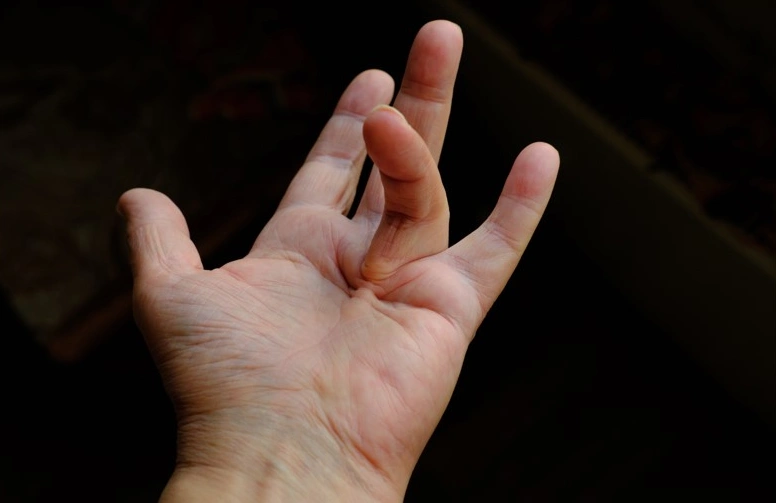
This is called a Dupuytren’s contracture, and it is the stage where the condition begins to have a clear impact on how the hand works.
Expert Non-Invasive Treatment for Dupuytren's and Ledderhose Disease Across the UK

How common is it?
Dupuytren’s is a common condition, affecting around 3% of people in the UK, roughly 1 in 30. It most often develops in people in their 50s and 60s, but it can occur earlier or later. Occasionally, it appears in people in their 20s or 30s, particularly where there is a strong family history or where the hands are exposed to repeated strain.
You may have heard it called “Viking disease” because it is more common in people of Northern European background, but in reality it can affect people from a wide range of backgrounds.
What causes Dupuytren's?
The main cause is genetic. It often runs in families, although you can still develop Dupuytren’s even if no one else in your family has it. This is because not everyone who carries the genes develops the condition, and it can skip generations, so it may not always be obvious within a family.
Some factors can increase the chance of it developing or progressing. These include smoking, diabetes, alcohol and repeated strain or vibration to the hands. For most people, it is a combination of genetic tendency and these additional factors rather than a single clear cause.
How is it diagnosed?
Diagnosis is usually straightforward. In most cases, a doctor can diagnose Dupuytren’s simply by examining your hand, as the pattern is very characteristic. Further tests, such as a scan, are only occasionally needed to confirm the diagnosis, usually where the findings are not typical.
How does Dupuytren's change over time?
Dupuytren’s is an unpredictable condition. In some people, it stays stable for many years and never causes a significant problem. In others, it progresses, either slowly over time or more noticeably over a shorter period. This variation is one of the reasons it can be difficult to know what will happen in any individual case.
In the early stages, you may notice a lump in the palm, sometimes with dimpling of the skin or areas of thickening under the surface. At this stage, the fingers are usually still straight, and function is unaffected. As the condition becomes more active, the fingers may start to feel tighter and may not straighten as easily as before. This is often a gradual change, and people sometimes only recognise it when they compare one hand to the other or notice that certain movements feel different.
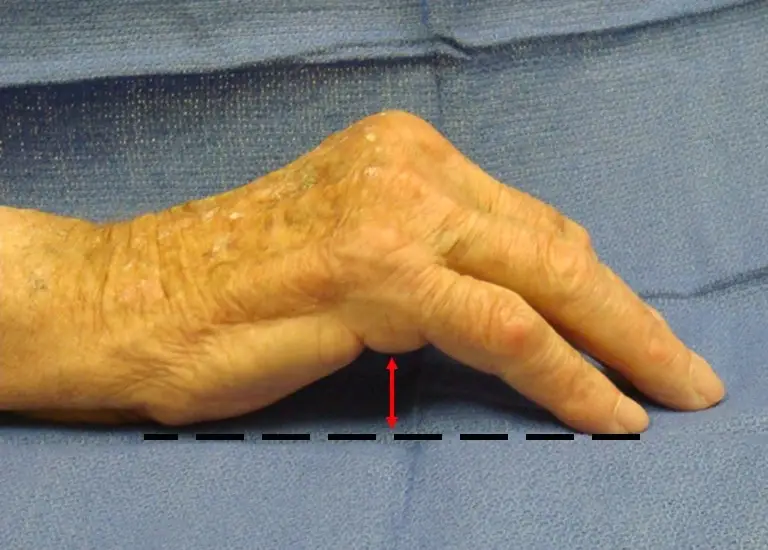
In more advanced stages, the finger can become fixed in a bent position. This is called a Dupuytren’s contracture, and at that point it can begin to interfere with everyday activities such as washing your face, putting your hand in your pocket or putting on gloves.
The key point is that not everyone follows the same pattern. Some people remain in the early stages indefinitely, while others progress. Understanding whether your condition is stable or changing is what helps guide when, and whether, to consider treatment.
When should you do something about it?
Treatment depends on the stage of the disease. If you have just developed a nodule and things appear stable, you may simply need advice on how to monitor the condition and what to watch out for over time. If the disease is becoming more active, for example if you notice new nodules, increasing thickening or a feeling of tightness in the fingers, this is the stage where radiotherapy may be considered. The aim is to reduce the chance of progression and lower the risk of a contracture developing.
If a contracture has already formed and the finger is bent, the problem becomes mechanical rather than biological. Treatment is then usually aimed at releasing the tight tissue, often with a procedure or surgery. The most important step is understanding which stage you are at, because that determines which options are appropriate and when they are most likely to be effective.
Summary
Dupuytren’s disease is a common and benign condition that affects the tissue under the skin of the palm. It can remain stable for many years, but in some people it progresses and affects how the hand functions. The condition typically moves from nodules, to tightening tissue, to contracture, although not everyone follows this pathway.
Understanding what stage your condition is at is the key to deciding what to do next. The earlier you know what is happening, the more options you have.
What to do next
If you think you might have Dupuytren’s disease, the next step is to have your hand assessed properly so that you understand what stage you are at and what to expect. That allows you to make informed decisions about monitoring or treatment at the right time.
If you would like to learn more, you can find further information at dupuytrensuk.com.