Finding a lump in your hand can feel alarming, but most are harmless. From arthritis-related bony lumps and ganglion cysts to Dupuytren’s disease, this guide explains the common causes, key differences, and when you should seek medical advice.


Most lumps in the hand are harmless. The common causes are ganglion cysts, arthritis-related bony lumps (Heberden’s and Bouchard’s nodes), calluses, trigger finger nodules and Dupuytren’s disease. Where the lump sits, how it feels, and whether it’s painful are usually the clearest clues to which one you have.
Finding a lump in your hand can be worrying. Many people notice a small bump in the palm, a swelling near a finger joint, or a rounded lump at the wrist and immediately wonder whether something serious is going on. The reassuring news is that most lumps in the hand are benign.
The hand contains joints, tendons, ligaments, skin, nerves, blood vessels and fat. Each of these tissues can produce lumps or bumps, and most of them are harmless. Often, the most useful clues are simply where the lump is located and how it behaves.
In this article, I will go through the common causes of lumps in the hand, explain how to recognise the features of Dupuytren’s disease, and highlight the signs that suggest that something less typical might be happening.
Arthritis-Related Lumps in the Fingers
One of the most common reasons people develop lumps in the hands is osteoarthritis.
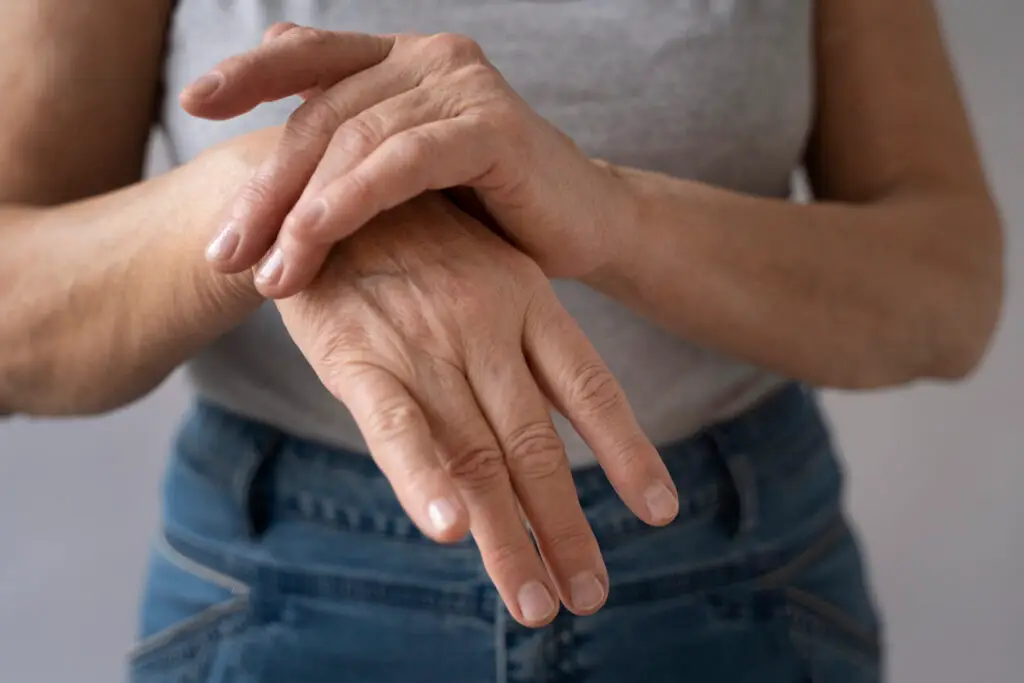
As joints gradually wear over time, the body may produce bony enlargements around them. These are called Heberden’s nodes and Bouchard’s nodes. Heberden’s nodes occur at the end joints of the fingers, closest to the nail. Bouchard’s nodes occur at the middle joints of the fingers.
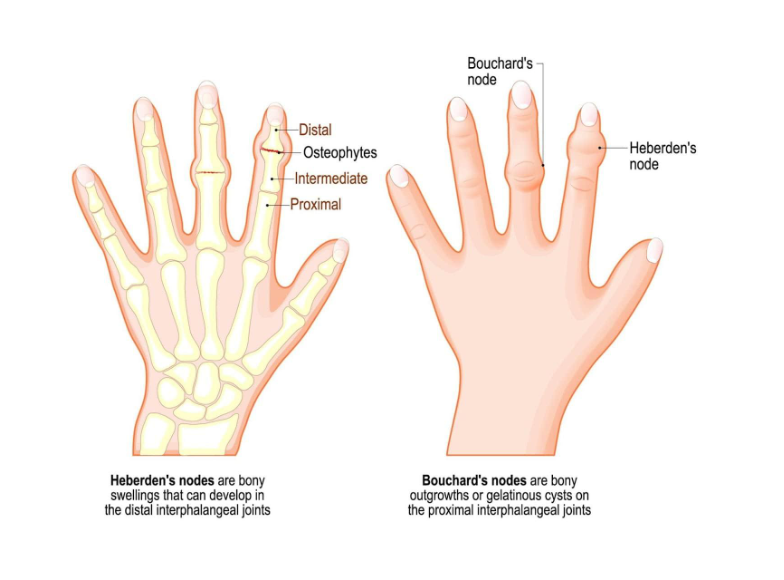
They usually develop slowly and are often associated with stiffness or aching in the joint. Many people notice the joint becoming slightly enlarged before the lump becomes obvious.
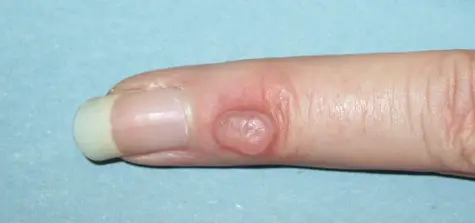
Another arthritis-related lump is a digital mucous cyst, which is a type of ganglion cyst (see below). This usually appears near the end joint of the finger, often close to the nail. It may look like a small dome-shaped swelling and can sometimes cause ridging in the nail.
In many cases, the underlying joint is arthritic, and the cyst forms as fluid escapes from the joint capsule.
Although osteoarthritis is the most common cause of these lumps, other forms of arthritis can also affect the hands. Inflammatory arthritis tends to cause broader joint swelling and tenderness rather than a single well-defined lump.
Ganglion Cysts
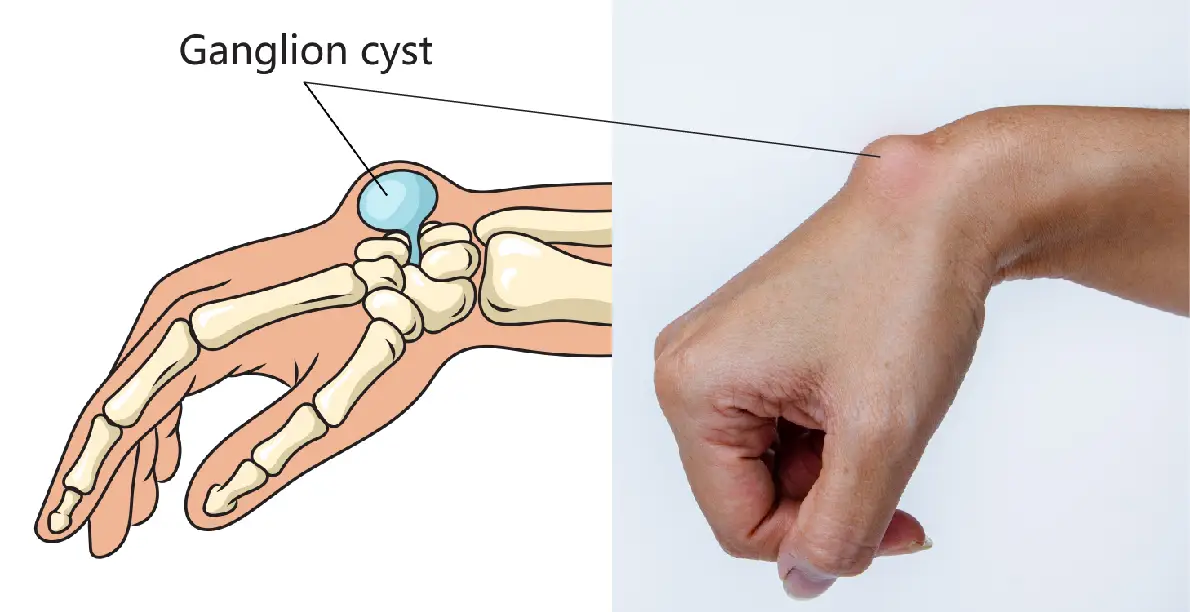
A ganglion cyst is one of the commonest lumps seen in the hand and wrist. These are fluid-filled sacs that arise from a joint or tendon sheath. They most often appear on the back of the wrist, but they can also develop on the palm side of the wrist or occasionally in the palm of the hand near the base of a finger.
Ganglion cysts usually feel smooth and rounded. They may be firm but slightly springy, and many people notice that they change size over time, sometimes enlarging and then shrinking again. When a ganglion appears in the palm near the finger base, it can sometimes be mistaken for other conditions because it sits in a similar location.
Calluses and Thickened Skin
Sometimes what feels like a lump is actually thickened skin rather than a deeper structure.
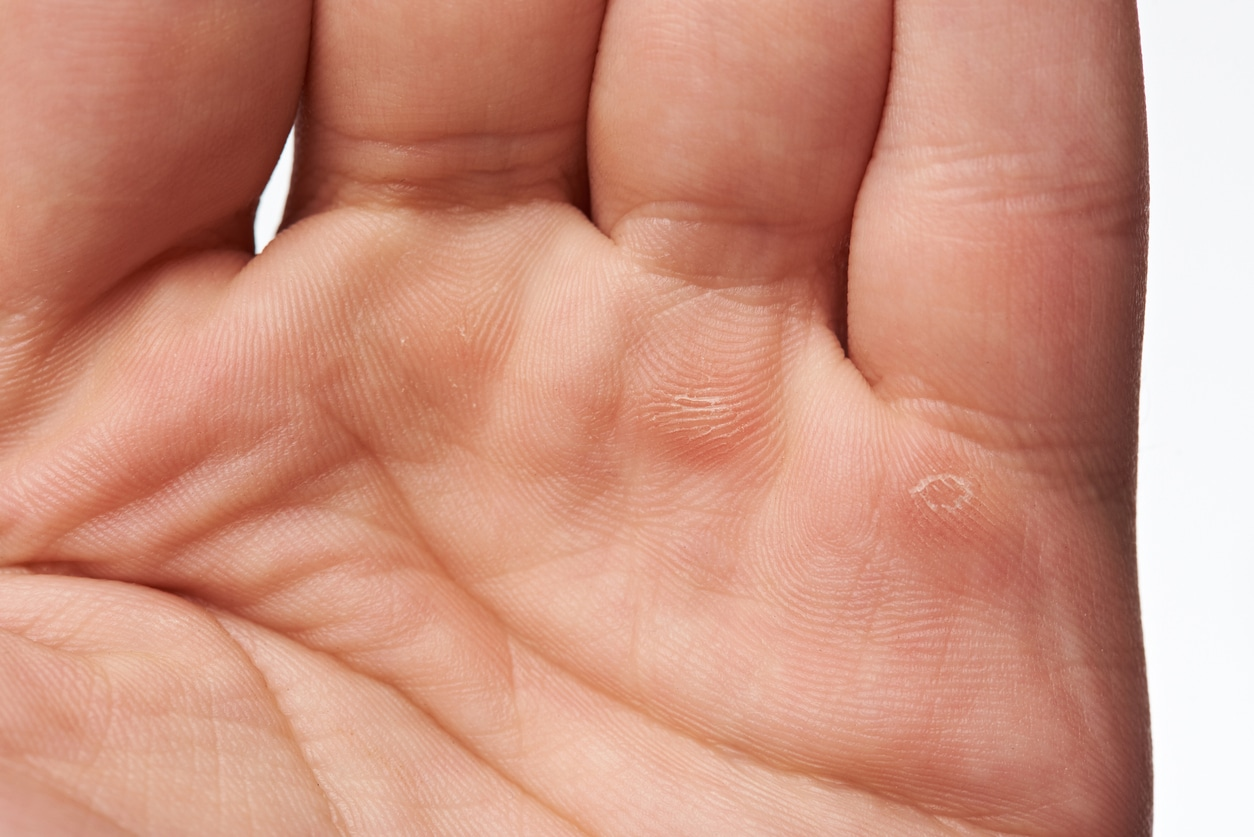
Calluses develop in response to repeated friction or pressure. They are common in people who use their hands a lot, for example, manual workers, gym users, gardeners, musicians or people who use tools frequently.
Calluses typically appear at the base of the fingers in the palm. They feel superficial rather than deep and are usually broader areas of thickened skin rather than a distinct nodule.
Unlike deeper lumps, they are part of the skin itself.
Trigger Finger Nodules
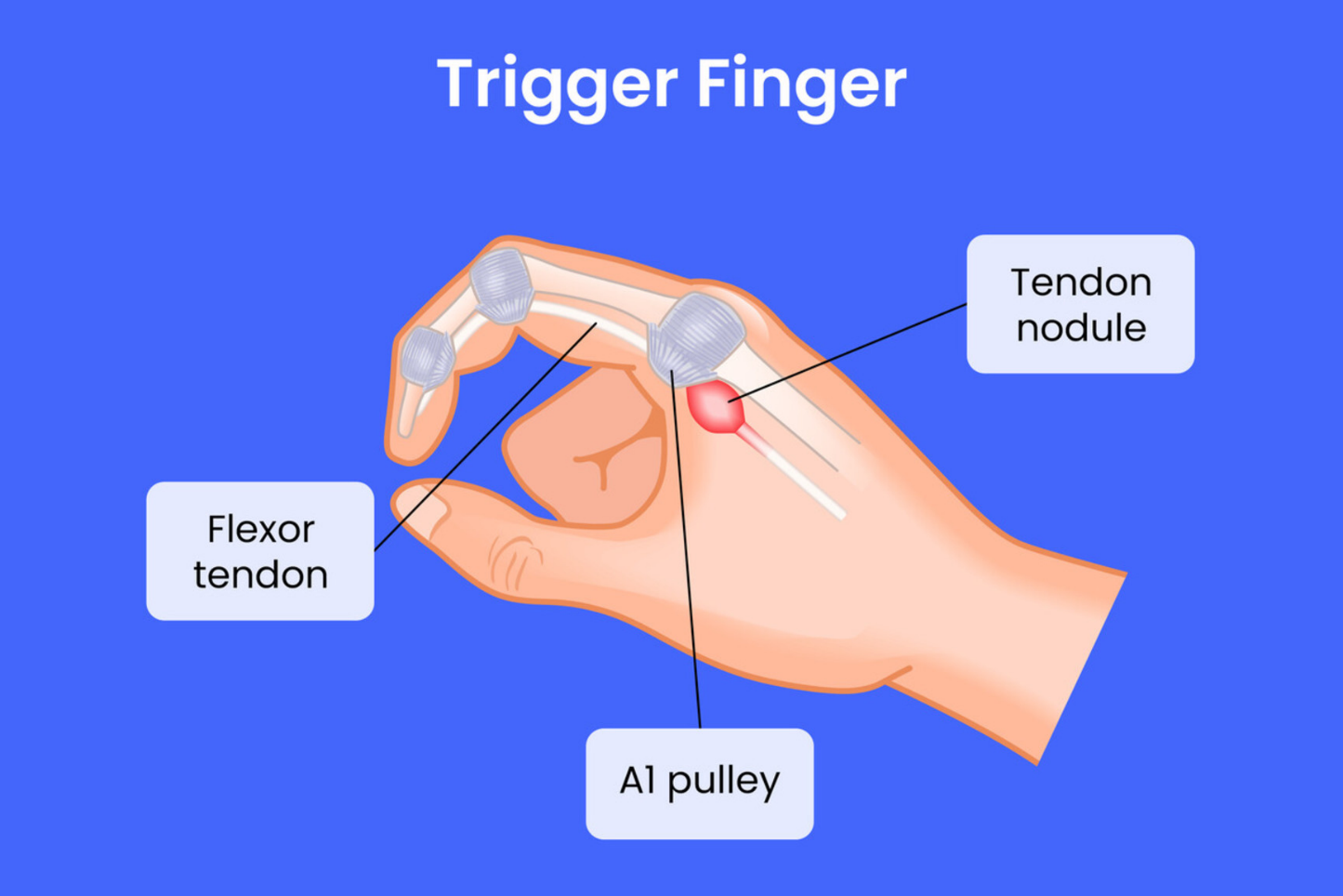
Another lump that sometimes appears in the palm is related to trigger finger. Trigger finger occurs when the tendon that bends the finger becomes irritated as it passes through a tight pulley at the base of the finger. As inflammation develops, a small nodule may form on the tendon.
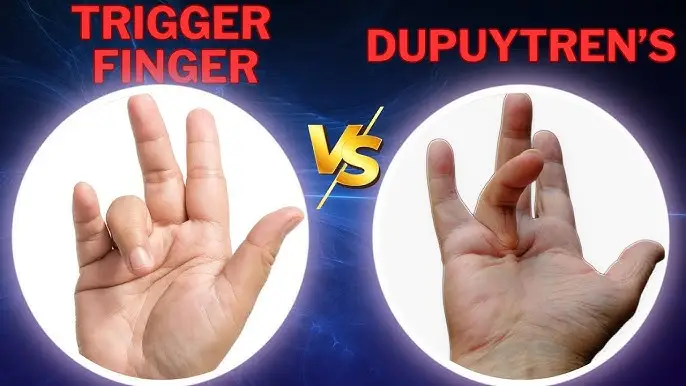
People often notice a small lump in the palm at the base of the finger. The key feature that distinguishes trigger finger is clicking or catching when the finger moves. In more severe cases, the finger may lock and then suddenly release. The nodule associated with trigger finger is often tender, which helps distinguish it from the painless nodules seen in Dupuytren’s disease.
Other Benign Lumps
A number of other benign lumps can occur in the hand, although they are less common.
These include giant cell tumours of the tendon sheath, epidermoid cysts, and lipomas (fatty lumps). These growths are usually slow-growing and often painless.
Although they are generally benign, any lump that continues to enlarge or causes symptoms may need further assessment.
A Lump in the Palm: Could It Be Dupuytren’s Disease?
When a lump appears in the palm, particularly near the ring finger or little finger, one important possibility is Dupuytren’s disease.
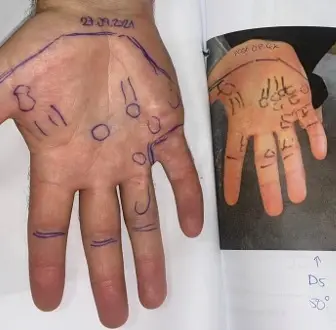
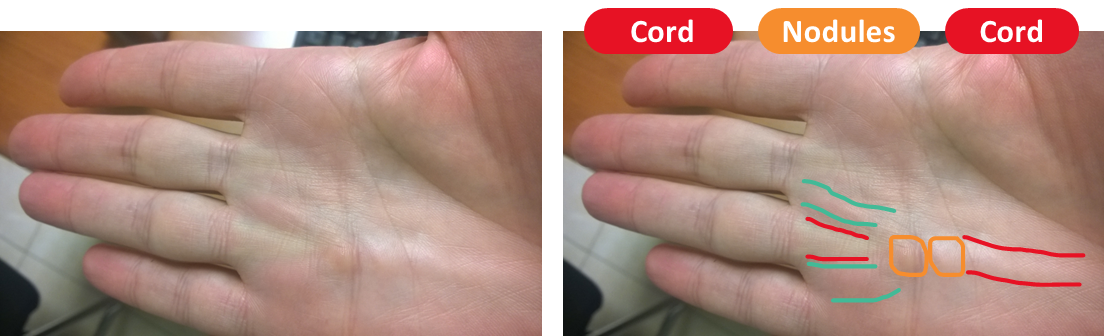
Dupuytren’s often begins with a firm nodule in the palm. Many people describe it as feeling like a small pea beneath the skin. The skin over the lump may look slightly puckered or tethered.
Unlike a ganglion cyst, the lump is not fluid-filled or round. Whilst it may be tender for a couple of months, this normally subsides and pain tends not to be a major feature. It is also generally not associated with clicking or locking of the finger.
Over time, some people develop cords beneath the skin that gradually pull the fingers down towards the palm. However, the condition often begins long before any bending of the fingers occurs. Early Dupuytren’s disease may therefore present simply as a firm nodule or thickening in the palm.
Wondering what stage your hand is at?
If you have noticed nodules, cords or early tightening and are unsure whether the timing is right, a proper assessment can give you a clear answer. Get in touch with Dr Shaffer to find out what stage your hand is at and what your options are.

What Features Suggest Dupuytren’s?
Dupuytren’s becomes more likely when a lump:
- sits in the palm, especially near the ring or little finger
- feels firm and attached to deeper tissue
- causes the skin to appear puckered or tethered
- has a cord that extends towards the wrist or towards the finger
When Might a Lump Be Something Else?
The vast majority of lumps in the hand are benign and are covered in the list above, but occasionally a lump may represent a less common condition.
Examples include vascular malformations, nerve tumours, skin cancers, and rare soft tissue tumours.
Features that should prompt proper medical assessment include:
- rapid growth
- significant or persistent pain
- numbness or tingling
- weakness or difficulty using the hand or fingers
- bleeding, ulceration, or colour change
These signs do not necessarily mean something serious is present, but they should not be ignored.
A Quick Location Guide
The location of a lump often provides the strongest clue.
- End of finger joint → Heberden’s node or mucous cyst
- Middle finger joint → Bouchard’s node
- Wrist → ganglion cyst
- Palm at base of finger → ganglion, trigger finger nodule, or Dupuytren’s nodule
- Thickened skin in palm → callus
This guide cannot replace a clinical assessment, but it can help explain what many people are feeling when they first notice a lump.
The Bottom Line
Lumps in the hand are extremely common, and the vast majority are harmless. The most frequent causes include arthritis nodes, mucous cysts, ganglion cysts, calluses, and trigger finger nodules.
However, when a firm lump develops in the palm, especially near the ring or little finger, Dupuytren’s disease becomes an important possibility. Recognising the difference between these conditions can help guide whether a lump simply needs reassurance or deserves further evaluation.
If You Are Unsure About a Lump in Your Hand
If you have noticed a lump in the palm and are wondering whether it could be Dupuytren’s disease, it is often possible to make the diagnosis from the clinical pattern even at an early stage.
You can explore the detailed guides on our site about the treatment options at various stages of the condition and what to expect at your first appointment. If a lump is changing, causing symptoms, or simply leaving you uncertain about what it might be, it is sensible to have it assessed.
Frequently Asked Questions
Is every lump in the palm a sign of Dupuytren's disease?
No. Many lumps in the hand have another cause, such as a ganglion cyst, an arthritis-related node, a callus or a trigger finger nodule. Dupuytren’s tends to produce a firm nodule in the palm, often near the ring or little finger, that may feel tethered to the skin. Whilst it can be tender for a couple of months, it tends not to be a major feature. Location, texture and pain all help tell these apart.
What's the difference between a ganglion cyst and a Dupuytren's nodule?
A ganglion cyst is a fluid-filled sac that feels smooth, rounded and slightly springy, and can change size over time. A Dupuytren’s nodule feels firm and solid, is not fluid-filled, and doesn’t shrink and enlarge the way a ganglion can.
Is a painful lump in the hand more serious than a painless one?
Not generally, but it’s a useful clue. Dupuytren’s nodules and ganglion cysts are usually painless, while a trigger finger nodule is often tender. Pain alone doesn’t confirm or rule out a diagnosis, but sudden or worsening pain, along with rapid growth, numbness or colour change, are reasons to get it checked out.
When should I get a lump in my hand checked by a doctor?
It’s sensible to get it assessed if the lump is growing quickly, is significantly or persistently painful, comes with numbness, tingling or weakness, or if the skin over it is changing colour, bleeding or breaking down. These features don’t necessarily mean something serious, but they shouldn’t be ignored.
Can a lump in the hand be diagnosed without tests or scans?
Often, yes. Conditions like Dupuytren’s disease can usually be diagnosed from where the lump is, how it feels and how it behaves, without needing further imaging, though a clinician may recommend tests if the picture isn’t clear.