Learn how disease stage, progression and symptoms can influence the timing of radiotherapy, with guidance from Dr Richard Shaffer.

Radiotherapy works best for early Dupuytren’s disease that is clearly getting worse.
However, not every early nodule needs treatment straight away. Some people will never need radiotherapy. Some people will need it, but not yet. The key issue is timing.
To help you judge the right time, there are four things you should check every couple of months. If you monitor these carefully, you are unlikely to miss the window when radiotherapy is most effective, and you are also unlikely to treat too early.
The four things to check
1. The extent of disease (what you can see and feel)
First, understand exactly what is present in your hand.
Dupuytren’s disease can include:
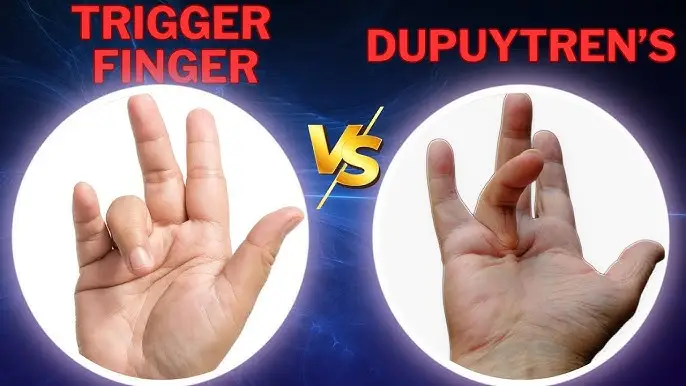
- Nodules: small round lumps in the palm
- Cords: firm bands extending either towards the fingers or back towards the wrist
- Skin dimpling: small indentations caused by fibres pulling on the skin
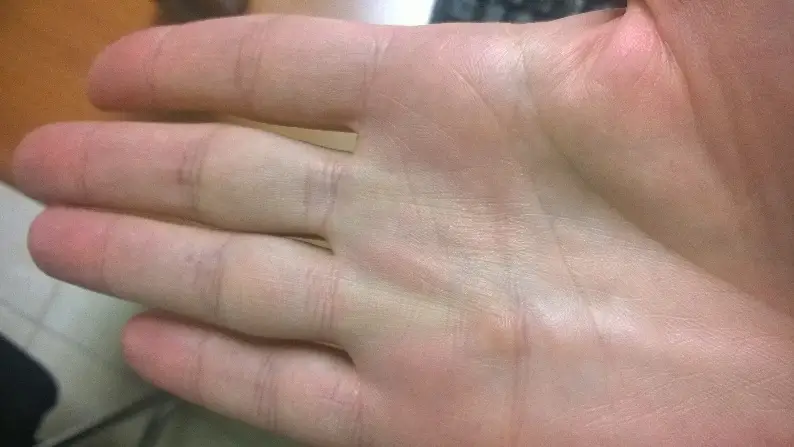
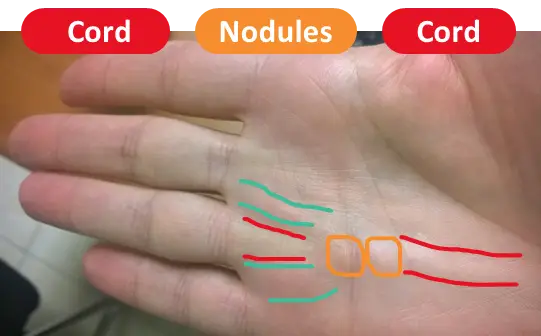
Cords that run towards the fingers are often easier to see than to feel. If you gently bend your fingers backwards, you may notice an abnormal whiteness extending into the finger. That is the cord becoming visible under tension.
Cords that run towards the wrist are usually easier to feel. You can detect them by moving your finger side to side across the palm and feeling for a firm band under the skin.
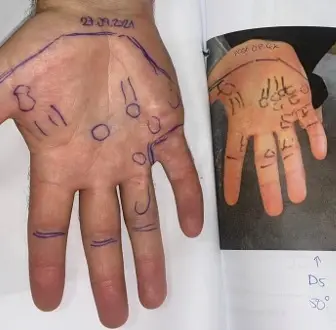
At your appointment, I will examine your hands carefully, mark the areas involved, and take a photograph. That photograph becomes your baseline. It is important that you also feel the areas yourself at that visit, so you know what I am feeling.
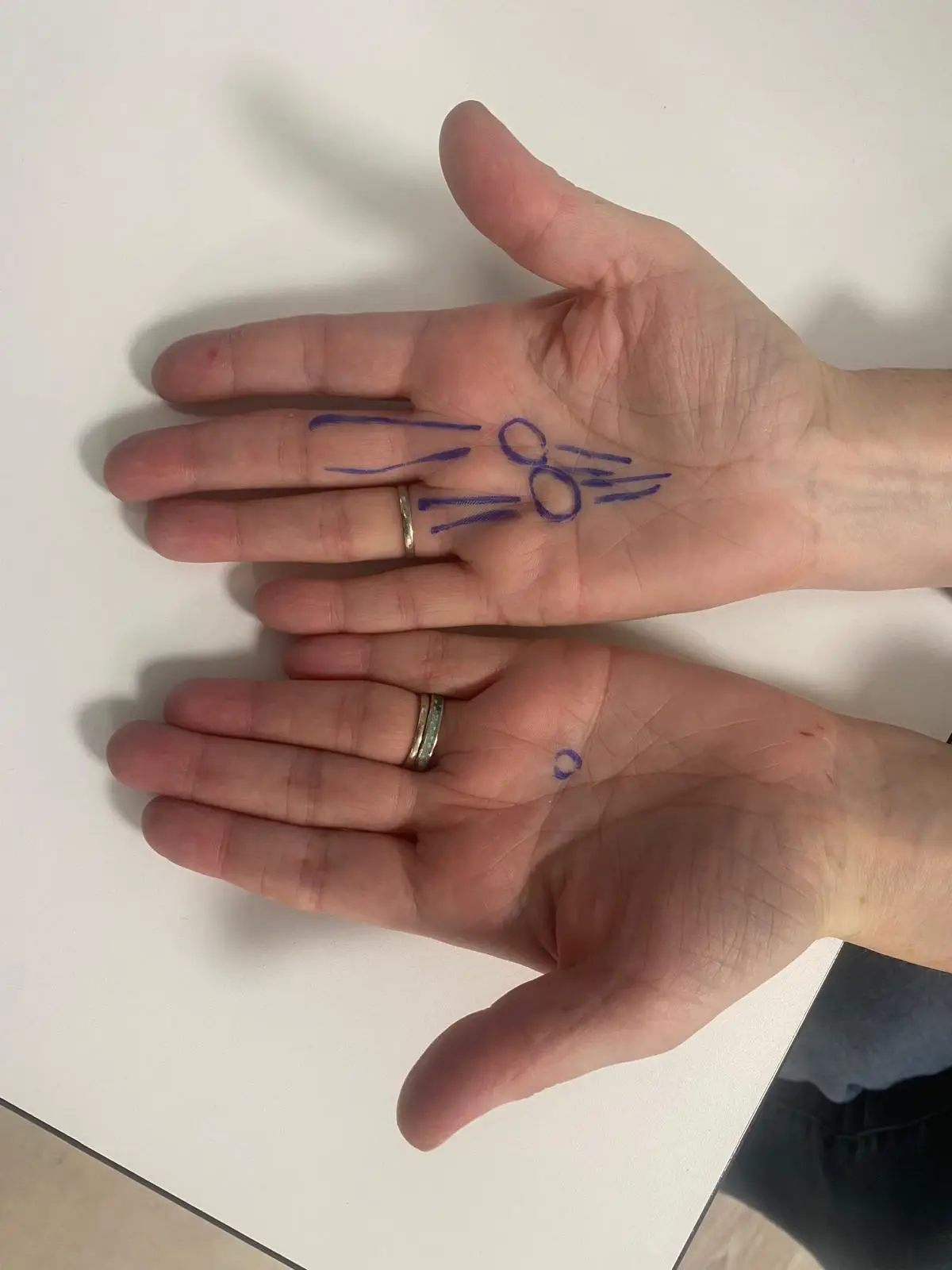
Two months later, you do not need to redraw or re-photograph anything. Simply feel your hands again and ask:
- Is there a new nodule?
- Is a nodule clearly larger than before?
- Has a cord extended further?
You are comparing what you feel now to what was present at your baseline appointment.
2. Symptoms (what you feel)
Some changes cannot be seen in a photograph.
You might notice:
- Redness
- Itching
- Tenderness
- Soreness
- A feeling that the area is more active or prominent
These symptoms do not automatically mean you need treatment. However, they can help us judge whether the disease is active.
3. Loss of the ability to bend the finger backwards
This is one of the earliest signs that the disease may be tightening, and it happens before a contracture develops.
Place your hand flat on a table.
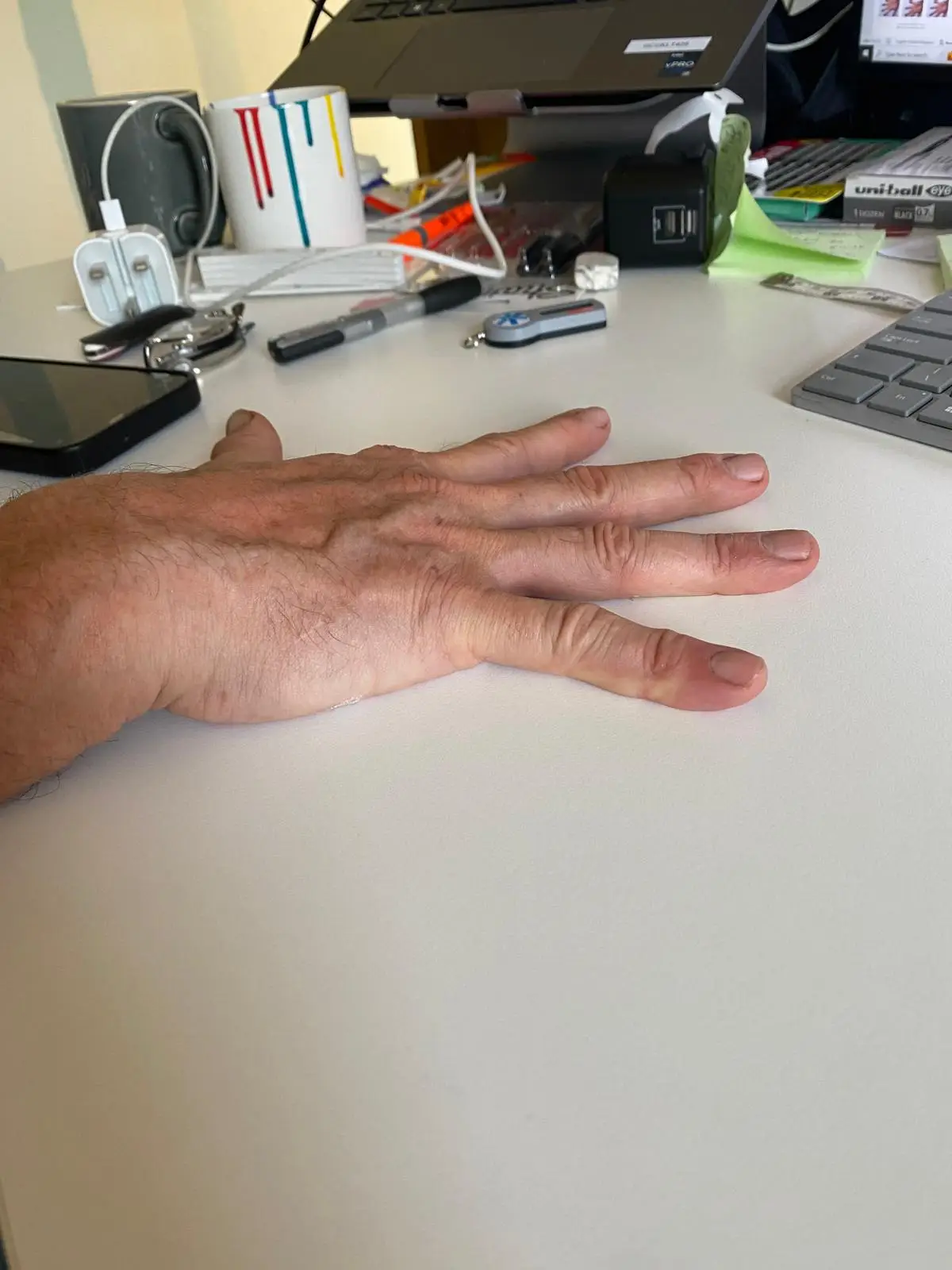
Then:
- Press down gently on the main knuckle (where the finger meets the hand) so the palm stays flat
- Lift the finger upwards as far as possible
- Hold it there for a few seconds
- Measure the distance from the tip of the nail to the table
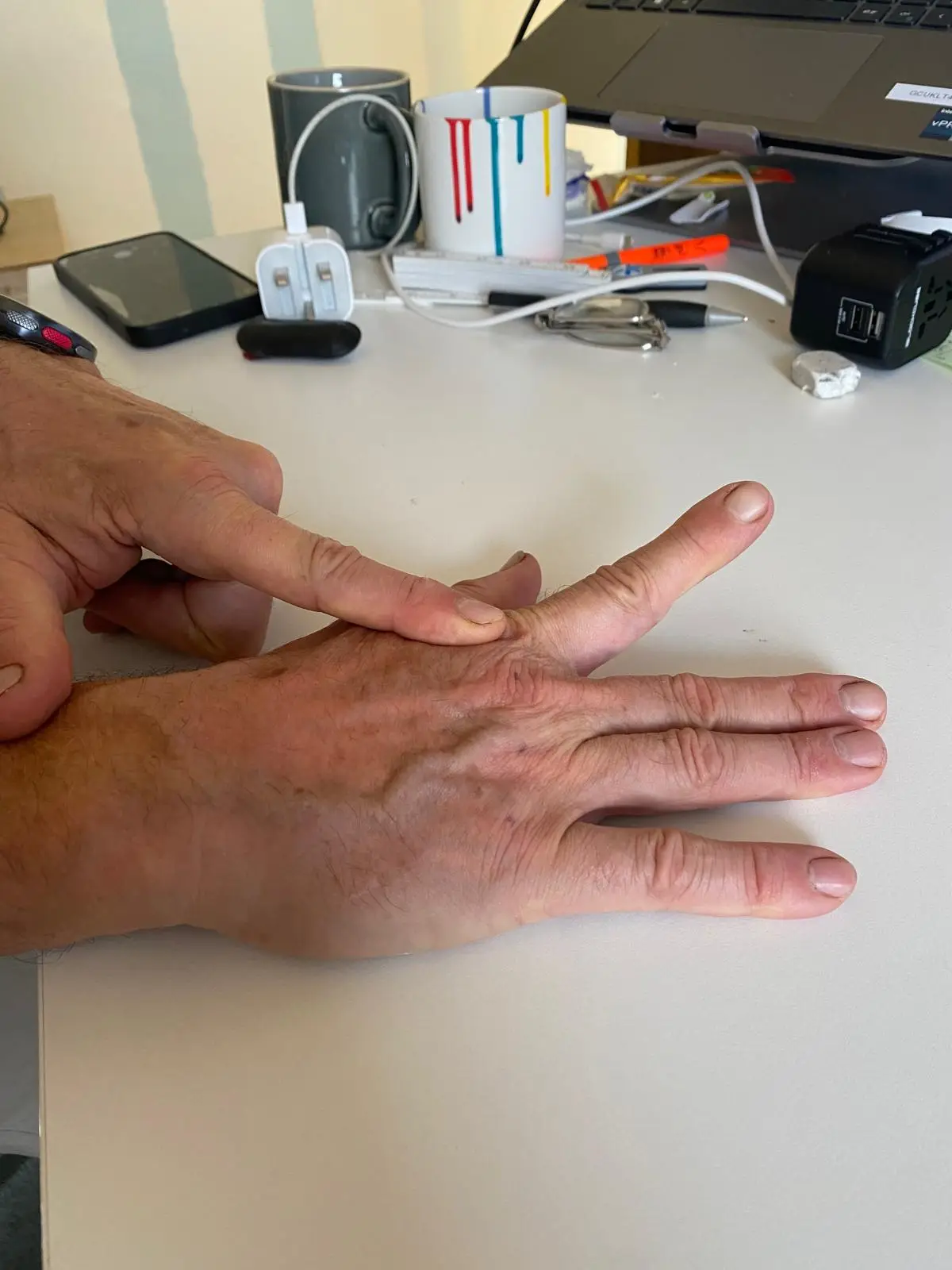
Do this for each finger on both hands.
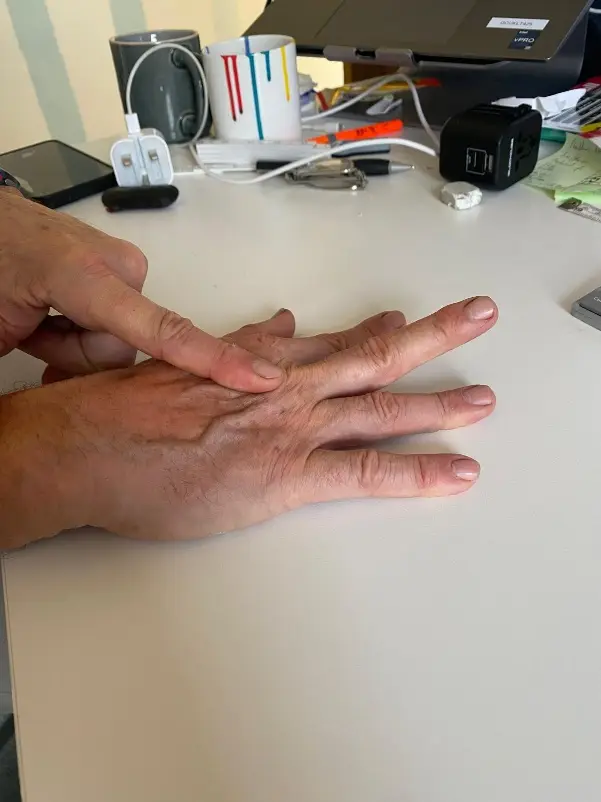
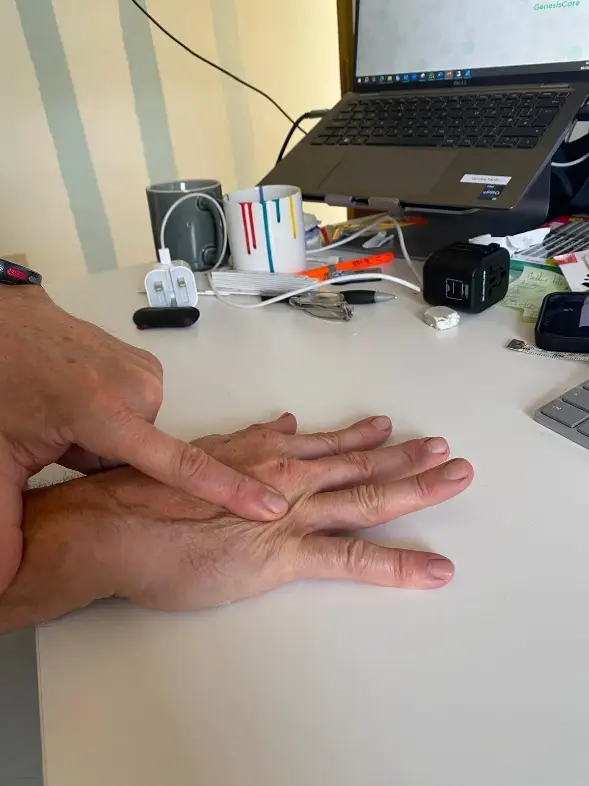
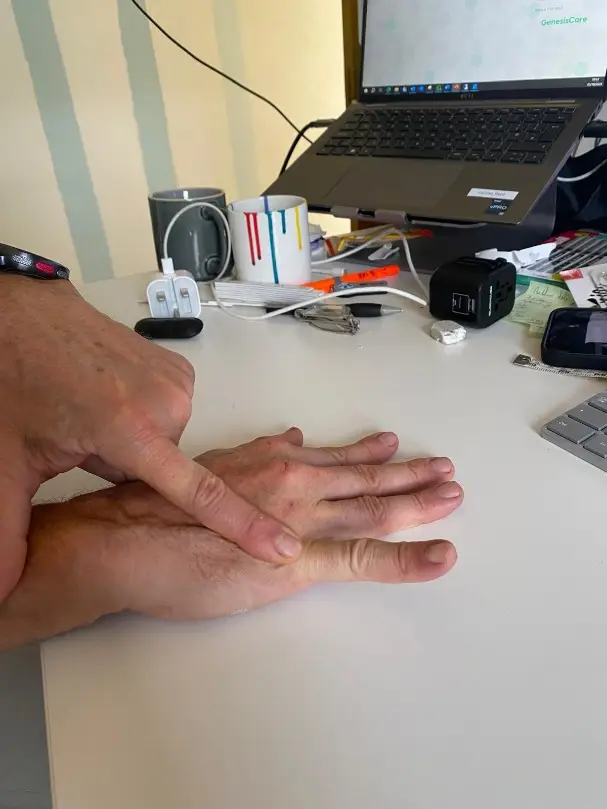
Small day-to-day differences do not matter. What matters is whether, over several months, the finger clearly cannot lift as high as it did before.
For example, if it measures 5 mm lower than it did two months ago, and then another 5 mm lower at the next check, that steady pattern suggests the disease is worsening.
This is not yet a contracture.
A contracture only develops when the finger can no longer fully straighten flat (to zero degrees) and instead starts to bend forwards. Loss of the ability to bend backwards is an early warning sign. Forward bending is a contracture.
4. Hand span
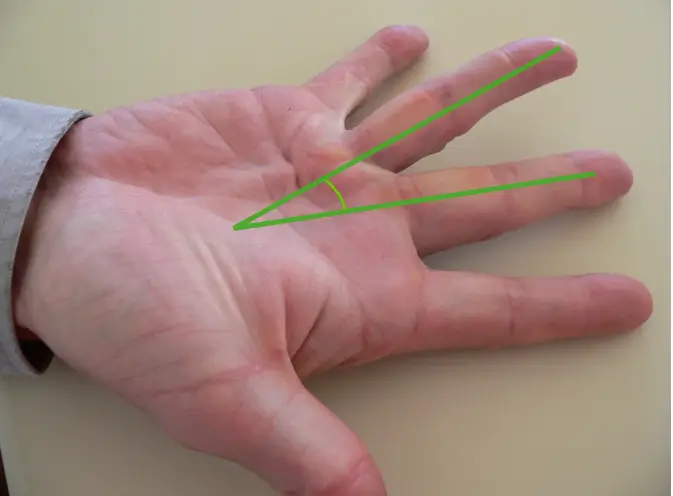
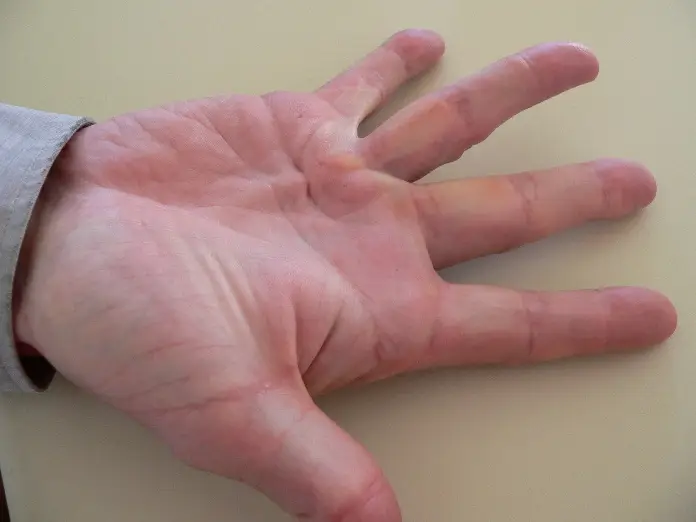
This checks whether the hand is tightening between the fingers.
This is how to do it:
- Lift your hand up
- Stretch your fingers and thumb as wide as you possibly can
- Place the hand onto a piece of paper while fully stretched
- Draw around the hand
- Label it clearly with the date
Wondering what stage your hand is at?
If you have noticed nodules, cords or early tightening and are unsure whether the timing is right, a proper assessment can give you a clear answer. Get in touch with Dr Shaffer to find out what stage your hand is at and what your options are.

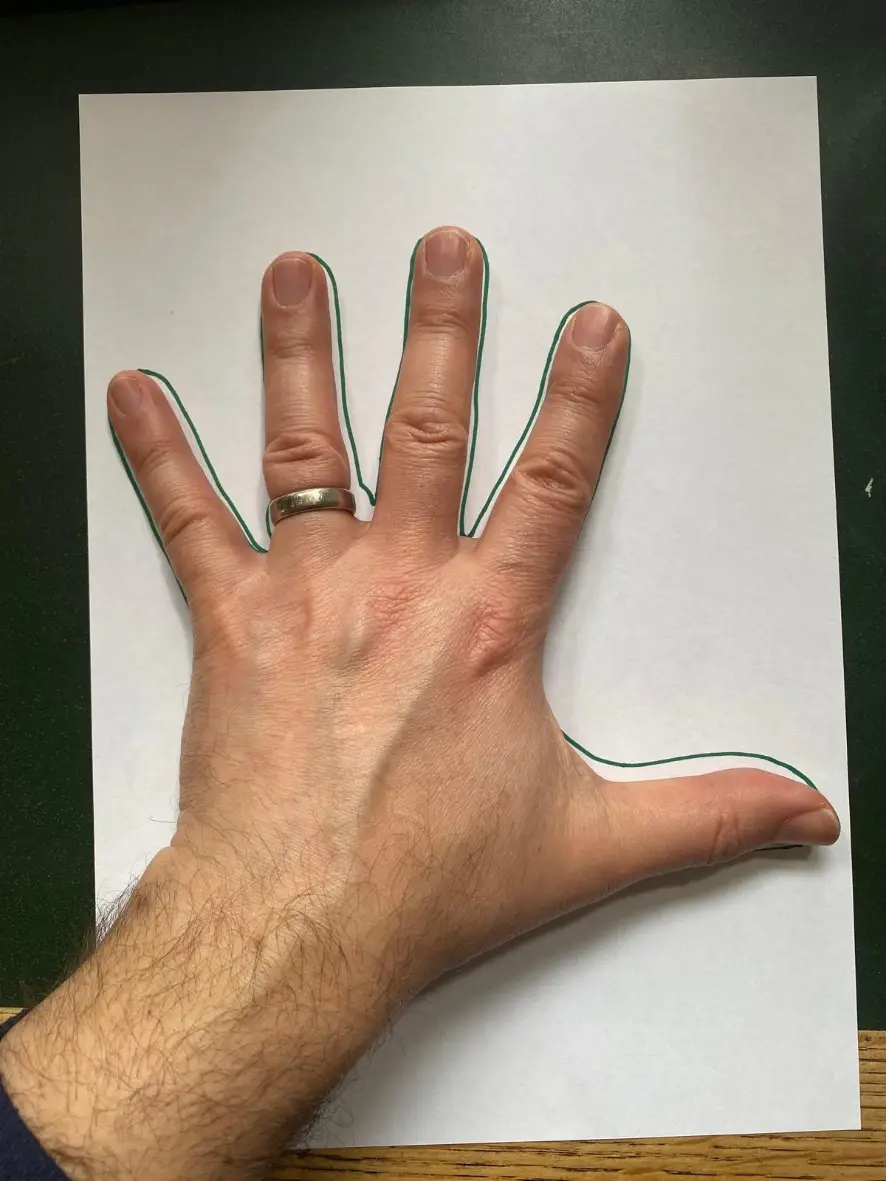
That drawing becomes your baseline.
Two months later, you do not draw around it again. Instead, place your thumb in exactly the same position on the original drawing and see whether your fingers can still stretch as wide as the outline.
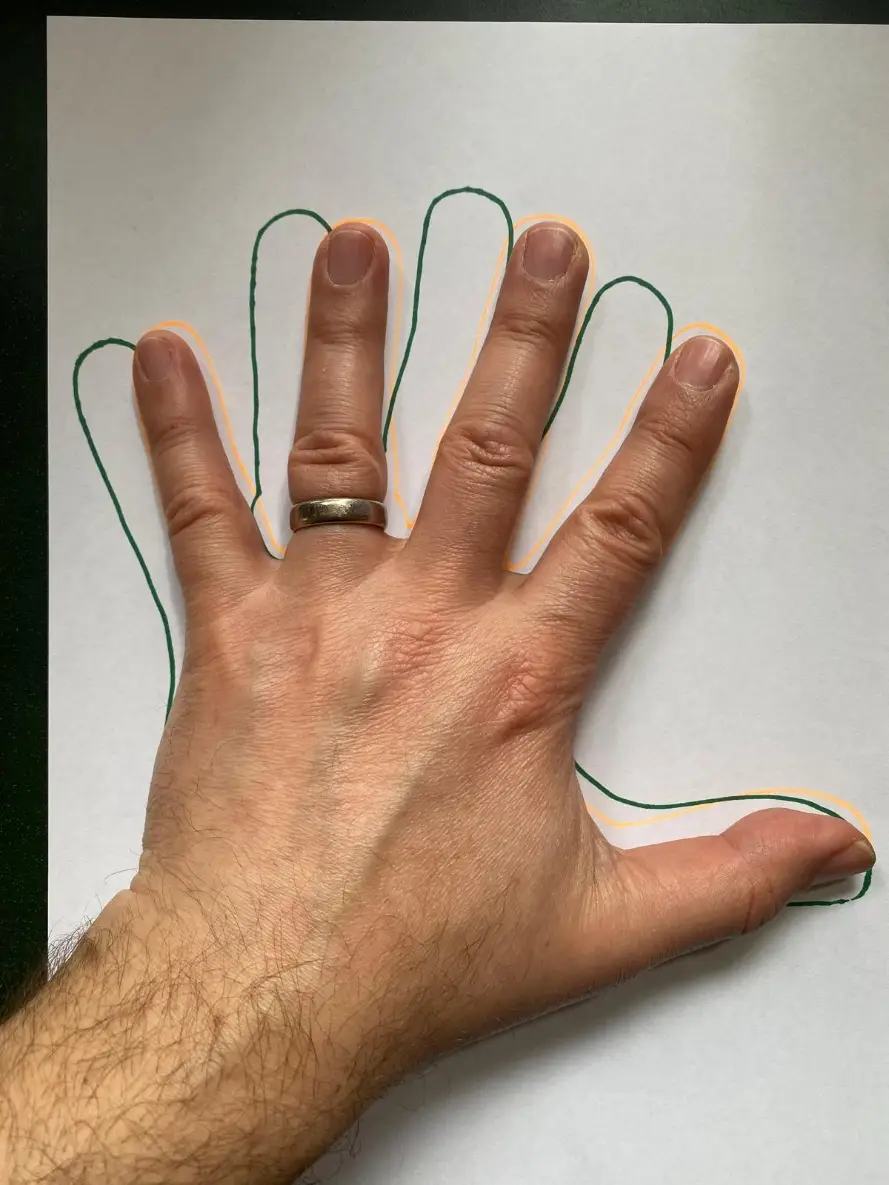
If they no longer reach the original line, that suggests tightening between the fingers.
What “early and getting worse” really means
Radiotherapy is most effective when:
- There is a confirmed diagnosis of Dupuytren’s disease (nodules, with or without cords and dimpling), and
- There is no fixed forward bending of the fingers (no established contracture), or only very early contracture of up to around 10–20 degrees, and
- There is clear worsening over time
A new small nodule that you have only recently noticed (or a nodule that seems a couple of millimetres larger) is important to note, but it is not necessarily a reason to seek treatment immediately.
Early changes like this are part of how Dupuytren’s disease behaves. The key question is whether there is a clear pattern of worsening over time.
If you are unsure, you can always get in touch and ask. Sometimes a brief review or repeat examination is all that is needed for reassurance.
You do not need to jump into radiotherapy for every small new lump. However, if the disease appears more extensive, if cords are developing, if the hand feels tighter, or if you are demonstrating reduced backward movement or reduced span, then it becomes much more likely that treatment is appropriate.
Radiotherapy is about timing. It is about treating when the disease is showing clear signs that it is advancing, not simply because something new has appeared.
Why monitoring matters
By checking these four areas every couple of months, you take control of the timing.
Rather than relying on memory or worrying whether something has changed, you are observing measurable differences over time.
When you notice definite worsening (a new nodule, enlargement, reduced backward movement, or reduced span), you will know it is time to get in contact. The decision about radiotherapy will feel clear and confident, because it is based on changes you have seen yourself.
Summary
When Dupuytren’s disease is very early and not threatening to cause problems, not everyone needs treatment straight away.
Some people will never need radiotherapy.
Some will need it, but not yet.
The key is recognising when the disease has genuinely started to worsen.
By monitoring:
- The extent of nodules and cords
- Symptoms
- Ability to bend the fingers backwards
- Hand span
you give yourself the best chance of acting at the right time, not too early and not too late.