
Ledderhose disease: symptoms, diagnosis and treatment
Ledderhose disease, also called plantar fibromatosis, is a condition where the tissue (fascia) in the sole of your foot thickens. It typically starts as a small lump in the arch of your foot (plantar fibroma). Over time, these lumps may grow and become tender and painful, especially when you stand or walk. About 1 in 4 people with Ledderhose disease have the condition in both feet.
If Ledderhose disease is causing pain or affecting your daily life, non-surgical treatments like radiotherapy can be effective at reducing pain and shrinking the lumps. Our consultant radiotherapy specialist Dr Richard Shaffer can assess your feet and give you an honest opinion on whether this treatment is suitable for you.


Symptoms and causes of Ledderhose disease
The first sign of Ledderhose disease is usually a firm, often painless lump in the arch of your foot (between the heel and the ball of the foot). These lumps can grow and become painful or tender when you stand, walk, or go barefoot, and wearing certain shoes may become uncomfortable.
Lump or callus?
A callus is an area of thickened skin, whereas a Ledderhose nodule develops in the tissue underneath the skin.
Is it plantar fasciitis?
Plantar fasciitis usually involves pain in your heel, and is often worse when you take your first steps of the day. Ledderhose nodules typically occur in your arch. If you are concerned about heel pain that hasn’t responded to simple, first-line treatments, it’s worth having a specialist examine your foot as we can also help with radiotherapy for plantar fasciitis.
Who gets it?
Ledderhose disease usually affects middle-aged and older people, although it can develop in younger adults too. It is more common in people who have Dupuytren’s disease in their hands, and some people have both conditions.
What causes it?
Doctors do not know the exact cause of Ledderhose disease; however, research shows it can run in families. It is not caused by injury, repetitive strain, or the type of footwear you wear.
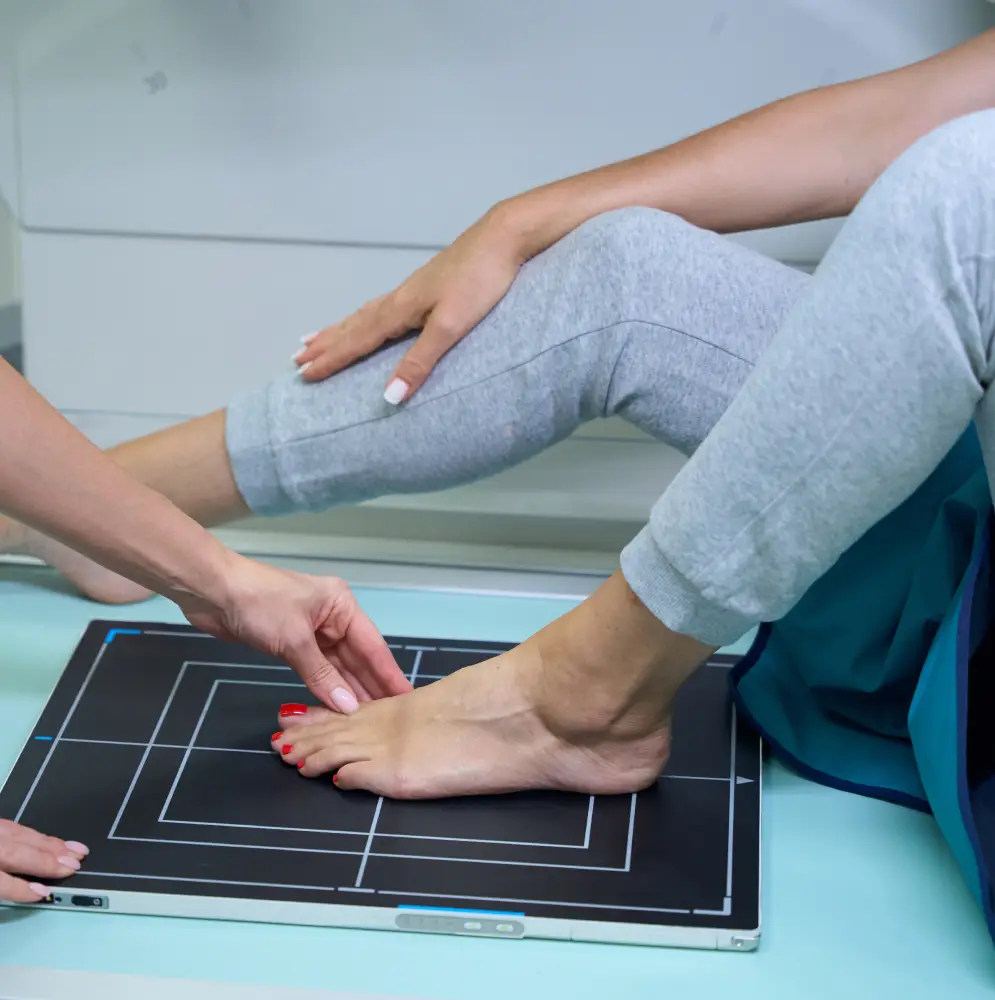
Diagnosis: how Ledderhose disease is confirmed
Your doctor can usually diagnose Ledderhose disease by examining the location and feel of lumps on your foot. They may occasionally recommend an ultrasound or MRI scan to clarify or rule out other causes of a lump.
It can be helpful to note when you first noticed the lumps, whether they have grown, and what makes the pain better or worse. Taking photos of your feet every couple of months gives you something to compare against.
Ledderhose disease treatment options in the UK
There is no cure for Ledderhose disease. However, there are treatments that aim to significantly relieve your pain, slow its progression, and help you walk more comfortably. The most appropriate option depends on how much the lumps trouble you.
| Option | Who it suits | What it typically involves | Typical recovery | Availability in the UK |
|---|---|---|---|---|
| Monitoring and self-care | Lumps that cause little or no pain | Keeping an eye on size and symptoms, photographing your feet, and wearing cushioned footwear or offloading orthotics | None | NHS and private |
| Footwear and insoles | Lumps that hurt when you stand or walk | Soft, cushioned insoles or orthotics to reduce direct pressure on the lumps | None | NHS and private |
| Low-dose radiotherapy | Painful or growing lumps | A short course of outpatient appointments using low-dose radiation aimed at the lumps. No anaesthetic, needles, or incisions | Most people carry on with normal life | Some NHS departments, and private |
| Surgery | Severe pain that other treatments have not helped | An operation to remove the lumps. The disease often comes back, and the sole of your foot may heal slowly | Several weeks, sometimes longer | NHS and private |
Treatments with limited effect
Some treatments are offered for Ledderhose disease when footwear changes haven't eased the pain, but their benefit is either short-lived or poorly supported by evidence. Steroid injections are given into the lumps to reduce pain. Any relief is often temporary, and the injection doesn't change the underlying nodules. Shockwave therapy is sometimes used for foot pain. For Ledderhose specifically, the evidence is limited.
What does not help
There is no good evidence that creams, supplements or massage can slow down how Ledderhose disease develops.
Not sure which fits you?
Radiotherapy for Ledderhose disease
Low-dose radiotherapy uses carefully targeted radiation to calm the tissue changes caused by Ledderhose disease. It involves significantly lower doses of radiation than those used in cancer treatments, and aims to reduce your pain and slow down the disease.

What treatment involves
What the evidence says
Why timing matters

Your consultation is with Dr Richard Shaffer
Dr Richard Shaffer is a Consultant Clinical Oncologist who has treated around 3,500 patients with benign conditions, including Dupuytren’s and Ledderhose disease. He also trains and mentors other consultants in radiotherapy for benign conditions.
He established Dupuytren’s UK to offer non-surgical options for people with Ledderhose disease and early Dupuytren’s disease, who are often told to wait until their symptoms become severe.
During your consultation, Dr Shaffer will examine your feet, assess how your lumps affect your mobility, and clearly explain your treatment options. He will give you personalised, honest advice on whether low-dose radiotherapy, simple monitoring, or other treatments may be more appropriate for you.
What happens when you get in touch
Getting started is simple, and you do not need to have it all worked out first.

Patients in their own words
These stories reflect individual experiences, and results vary from person to person. They are included to give you an idea of what other patients have experienced during treatment.

Most UK Medical Insurances Cover This Treatment
Radiotherapy treatment at Dupuytren’s UK is covered by most major private medical insurance providers and we also offer a range of self-pay options.
Your treatment at Dupuytren's UK can be funded by a number of private medical insurance providers, including Bupa, Vitality and WPA. Other private medical insurance providers may fund your treatment on a case-by-case basis. All our services are available for patients who are looking to self-pay too. We accept a variety of payment methods and will provide you with a detailed quote for your treatment. If you’d like an estimate of the costs for your care, contact us through the "Contact" page.


Where you will be seen and treated
You can choose where you have your consultation and treatment.
Where possible, we recommend seeing Dr Shaffer in person for your first consultation. You can book an appointment at one of our clinics in London, Guildford, Manchester or Nottingham.
If you are unable to attend one of these clinics — for example, if you live outside the UK — Dr Shaffer can also see you by video consultation to assess whether treatment may be suitable for you.
If you decide to go ahead, you can have your treatment at whichever of our 16 centres is most convenient for you. Find your nearest centre below.
Ledderhose disease: your questions answered
Can you get Dupuytren’s in your feet?
Ledderhose disease is sometimes called Dupuytren’s disease of the foot, as it involves the same kind of tissue thickening in your foot rather than your hand. Other names for Ledderhose disease are plantar fibromatosis and, less formally, Viking disease of the foot. Lumps and pain are more common with Ledderhose than bent toes.
Is Ledderhose disease painful?
Not always – you may have lumps that don’t cause any pain. However, for some people, the pain increases as the lumps grow, particularly when they stand, walk or go barefoot.
What is the difference between Ledderhose disease and plantar fasciitis?
Both conditions affect your plantar fascia, but plantar fasciitis is caused by tissue wear and tear, and Ledderhose disease is caused by abnormal growth. Because their names are similar, the two are sometimes confused, but they are quite different: Ledderhose disease causes firm lumps in the arch of the foot, while plantar fasciitis usually involves pain in the heel.
Will Ledderhose disease go away on its own?
The condition behaves differently in different people. Ledderhose nodules can stay the same for years in some people and grow gradually in others. Different treatments may be appropriate based on how much pain and difficulty the lumps are causing.
Can Ledderhose disease be cured?
No treatment can guarantee you permanent relief from Ledderhose disease. However, studies show that radiotherapy can often relieve pain and reduce the size of the lumps. Ledderhose nodules tends to return in most people after surgery, which is one reason it is usually only recommended for cases where radiotherapy hasn’t worked.
Can Ledderhose disease be treated without surgery?
Yes. Early Ledderhose disease can be treated with non-surgical approaches like specialised footwear changes and insoles. Low-dose radiotherapy is a non-surgical option when lumps remain painful or continue growing despite these conservative treatments.
Does radiotherapy work for Ledderhose disease?
In a trial of 84 people comparing radiotherapy with a dummy treatment, more patients who had radiotherapy reported pain relief at 12 months compared with those in the dummy group. Benefit builds gradually, and results vary from person to person. Read about the trial.
Is radiotherapy for Ledderhose disease safe?
Radiotherapy for Ledderhose disease uses much lower doses of radiation than are used for cancer radiotherapy treatments. It is targeted precisely at the lumps in your foot. Many people experience side effects like temporarily dry or red skin in the treated area. There is also a very small theoretical risk of a type of slow-growing skin cancer in the treatment area, around 0.1% (one in 1000) lifetime risk.
Dr Shaffer will discuss all the risks of radiotherapy with you during your consultation, so you can make an informed treatment decision.
Is Ledderhose disease treated on the NHS?
Radiotherapy for Ledderhose disease is not generally available through the NHS. NHS care usually focuses on managing symptoms, with measures such as footwear advice, insoles and pain relief. If you are considering radiotherapy, you can see Dr Shaffer privately through Dupuytren’s UK to discuss whether treatment is suitable for you.
Is Ledderhose disease a disability?
Being diagnosed with Ledderhose does not automatically mean you have a disability. This depends on how much the condition affects your everyday activities, such as walking, over the long term. Disability benefits are assessed by how much your condition affects your daily life, not on the diagnosis itself. Your GP, Citizens Advice or the GOV.UK website can advise you on what you may be entitled to.
Do I need a GP referral?
If you are paying for your treatment yourself, you do not need a GP referral and can book directly with us.
If you have private medical insurance, your insurer may require a referral letter, usually from your GP, before they will authorise your consultation or treatment. We recommend checking with your insurer before booking.