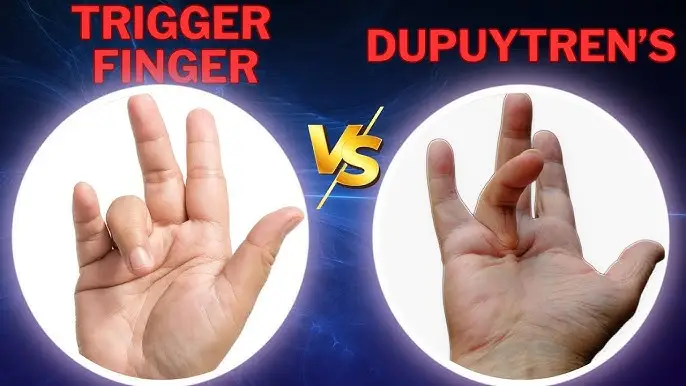
Is radiotherapy safe for Dupuytren’s disease? This guide explains the radiation dose used, common short- and long-term side effects, and the real level of cancer risk so you can make an informed decision about treatment.


One of the most common concerns patients have about radiotherapy for Dupuytren’s disease is whether it is safe. The word “radiation” understandably causes anxiety, particularly because it is often associated with cancer treatment. It is important to address that concern directly and explain clearly what this treatment involves and what the actual risks are.
The radiation dose is much lower than in cancer treatment
What is important to understand is that while the same type of radiotherapy is used for Dupuytren’s as in cancer treatment, it’s used at a much lower dose. For Dupuytren’s disease, the total dose is usually around 30 Gy (Gy or Gray is how the amount of radiotherapy given is measured), whereas cancer treatments typically use around 60 to 70 Gy. This difference in dose is the main reason why the side effects and risks are much lower.
Radiotherapy works by affecting how cells behave. In cancer, the aim is to stop cancer cells growing and dividing, which they do very aggressively. In Dupuytren’s disease, the same principle applies, but the target is different. Radiotherapy reduces the activity of fibroblasts, which are the cells that form scar tissue under the skin and lead to nodules and cords. Because these cells are not growing as aggressively as cancer cells, you don’t need such a high dose of radiotherapy to control them.
Why comparing with X-rays isn’t very helpful
Patients often ask how this compares with X-rays used to look at bones in the body. Although this sounds like a helpful comparison, it doesn’t really reflect how radiotherapy works.
X-rays use very small amounts of radiation to create an image, whereas radiotherapy delivers a planned dose to a defined area to change how cells behave over time. These are fundamentally different uses of radiation, so trying to compare them directly can be misleading.
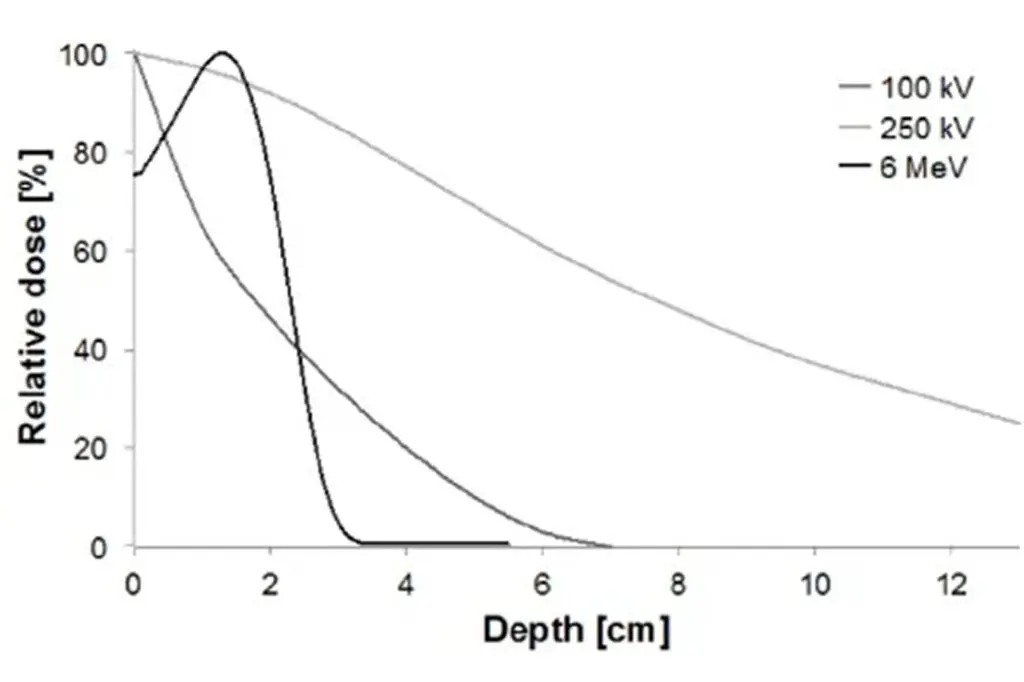
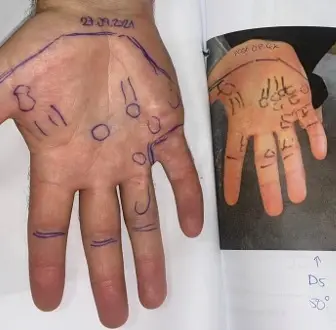
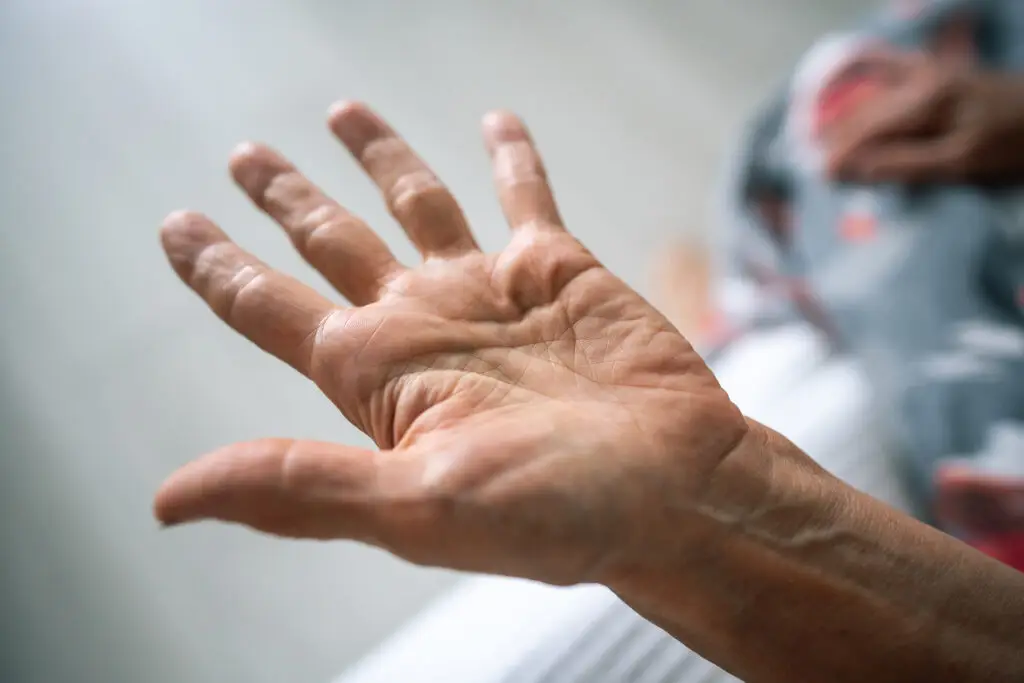
In Dupuytren’s disease, the treated area is just the palm of the hand. The tissue that is mainly affected in that area is the skin, which is why most of the side effects relate to the skin rather than to deeper parts of the body. This is an important part of understanding the overall safety of the treatment.
What are the short-term side effects?
Radiotherapy for Dupuytren’s disease is very well tolerated, and you won’t feel anything during the treatment itself. It does not cause pain, and it does not make you feel unwell, so you can drive yourself to and from appointments and carry on with normal daily activities.
The only time you need to make adjustments is if the skin becomes red or sore after treatment. At that point, the skin is more sensitive and more prone to irritation, so it is sensible to avoid heavy gripping, friction, or anything that might damage the skin until it settles.
A few weeks after treatment, the skin in the treated area may become red, dry, or slightly sore. Some people notice itching or a mild burning sensation. This is usually mild and often described as being similar to a mild sunburn. If this happens, most people simply use a basic moisturiser and reduce heavier use of the hand for a short period, and things usually settle within two to three weeks. Occasionally, there can be some swelling in the treated area, but more significant reactions are very uncommon.
Expert Non-Invasive Treatment for Dupuytren’s and Ledderhose Disease Across the UK
Dr Richard Shaffer set up Dupuytren’s UK in April 2011 to provide non-invasive treatments for people who suffer from benign conditions such as Ledderhose disease and early-stage Dupuytren’s contracture in the Guildford area. Today, Dupuytren’s UK offers this service to patients throughout the UK.

What are the long-term side effects?
Over the longer term, the most common effect is some dryness of the skin. This is usually mild and can be managed easily with moisturiser.
Some people notice small changes in the skin, such as it feeling slightly thicker or having a different texture. These changes are generally minor and do not affect how the hand works.
What about the risk of cancer?
One of the most important questions patients have is whether radiotherapy could cause cancer in the future. There is a small risk of developing a skin cancer in the treated area. For an average person treated around the age of 50, this risk is estimated to be around 0.1%, or 1 in 1,000 over a lifetime.
This type of skin cancer is usually a basal cell carcinoma, which does not spread to other parts of the body and is typically straightforward to treat.
To put that into perspective, the lifetime risk of developing skin cancer from normal sun exposure is around 10%. So the additional risk from radiotherapy is very small, but it is not zero, and it is important to understand that.
The risk varies with age. In younger patients, such as those in their 20s, the risk may be roughly double this level, so around 0.2%. In older patients, particularly over the age of 60, the risk is lower and may be considered very small.
The reason the overall risk is low is mainly because of where the treatment is given. Radiotherapy for Dupuytren’s disease is delivered to the hand, and the effects are largely limited to the skin. This is very different from treatments that involve areas of the body where more serious cancers can develop.
Putting this into perspective
When thinking about safety, it is important to balance the risks of treatment against the risks of the condition itself. Dupuytren’s disease can progress over time, leading to tightening of the fingers and, in some cases, the need for procedures such as needling or surgery.
These treatments can have their own risks and recovery periods, and they do not always fully correct the problem. In addition, the condition can come back even after treatment. Radiotherapy is used earlier in the course of the disease to try to reduce the chance of reaching that stage.
No treatment is completely without risk, so the key question is whether the potential benefit of preventing progression outweighs the small risks associated with treatment in your particular situation.
Summary
Radiotherapy for Dupuytren’s disease uses the same type of treatment as cancer radiotherapy, but at a much lower dose, which is why the side effects are usually mild.
Most side effects are limited to the skin and settle within a few weeks, with some people experiencing mild long-term dryness that can be managed easily. There is a small increased risk of a type of skin cancer in the treated area, but this risk is low and needs to be weighed against the potential benefit of preventing the disease from getting worse.
If you are considering treatment, the most useful next step is to have a discussion about your individual situation so that you can make a decision based on a clear understanding of both the benefits and the risks.