If you’re a surgeon or dentist and notice a lump in your palm, even subtle changes can matter. While often painless, it may be an early sign of Dupuytren’s disease. Understanding progression and getting early assessment can help protect long-term hand precision and function.


When You Notice a Change in Your Hand
If you are a surgeon or dentist, you rely on your hands in a very specific way. Much of your work depends on precise positioning, controlled movement, and the ability to maintain a stable grip over prolonged periods.
Because of that, you tend to notice even small changes.
It often begins with something subtle. A small lump in the palm. A slight thickening that was not there before. It may not be painful, and it may not affect your work in any obvious way. In most cases, it is easy to dismiss at first, particularly if everything still feels functional.
However, when a change persists, or very gradually evolves, it is worth considering whether there is a specific underlying cause.
What This Might Be
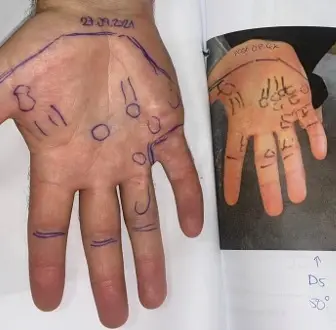
One possible explanation is early Dupuytren’s disease. This is a condition affecting the tissue beneath the skin of the palm, where that tissue gradually thickens over time.
In its early stages, it often presents as a small, firm lump. As it develops, that area can extend into a band of tissue, known as a cord, which may run towards one or more fingers. Over time, that cord can tighten, leading to a gradual reduction in finger extension.
At an early stage, these changes are often subtle. The key feature is persistence. The tissue does not return to normal, and there may be a slow but definite change over time.
Why It Matters in Surgical and Dental Practice
In most people, early Dupuytren’s disease causes little or no immediate functional limitation. Grip strength is preserved, and day-to-day activities are unaffected.
However, surgical and dental work place specific demands on the hand. You are often maintaining a precise hand position for extended periods, holding instruments steadily, and making fine adjustments with minimal margin for variation.
Even small changes in the palm can, over time, begin to influence how the hand rests and how the fingers extend. A gradual increase in tension, or a slight loss of extension, may not be noticeable at first but can become more relevant with sustained or repetitive work.
This is not about sudden loss of function. It is about the possibility of gradual change. For most people, that change is slow, but in a profession where precision matters, it is something worth recognising early.
Expert Non-Invasive Treatment for Dupuytren’s and Ledderhose Disease Across the UK
Dr Richard Shaffer set up Dupuytren’s UK in April 2011 to provide non-invasive treatments for people who suffer from benign conditions such as Ledderhose disease and early-stage Dupuytren’s contracture in the Guildford area. Today, Dupuytren’s UK offers this service to patients throughout the UK.

Why It Develops
Dupuytren’s disease is primarily genetic. Some individuals are predisposed to form this type of fibrous tissue in the palm, often without any obvious trigger.
It commonly becomes apparent in mid to later life. Factors such as age, family history, diabetes, smoking, and alcohol are associated with its development and progression.
Repeated use of the hands does not cause the condition, but it may influence when it becomes noticeable. For surgeons and dentists, who rely heavily on consistent and precise hand function, these changes are often detected earlier simply because small differences are more apparent.
What You Can Do at an Early Stage
If the changes are mild and stable, observation is a reasonable approach. Many cases remain unchanged for long periods and never become functionally significant.
However, if there is evidence of progression, or if you are concerned about the potential long-term impact on your work, early assessment is worthwhile. This allows you to establish a baseline and to understand whether the condition is active.
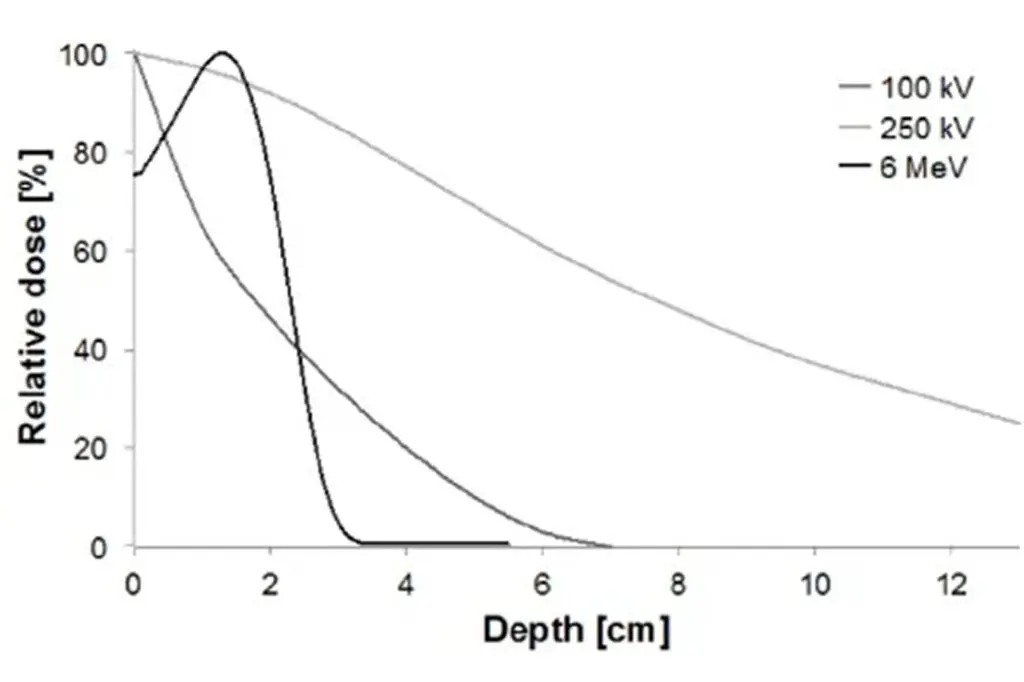
One option in selected early cases is radiotherapy. This is a targeted, low-dose X-ray treatment aimed at reducing the activity of the cells responsible for the tissue change.
The aim is to stabilise the condition and reduce the likelihood of progression to finger tightening. In many patients, the disease remains stable following treatment, and in a proportion, early changes soften over time.
Treatment is generally straightforward and well tolerated. Short-term effects are usually limited to mild skin redness or irritation, and longer-term effects are typically confined to some degree of skin dryness.
When to Have It Assessed
If you notice a persistent lump or thickening in the palm, particularly if it appears to be changing over time, it is sensible to have it assessed.
Early Dupuytren’s disease is unlikely to affect your ability to work in the short term. However, it is one of those conditions where early recognition allows you to make informed decisions before any functional limitation develops.
If you are in a role where your hands are central to your work, it is worth understanding exactly what you are dealing with. A straightforward assessment can clarify whether this is Dupuytren’s disease, whether it is active, and whether anything needs to be done at this stage.
If you would like a specialist opinion, please get in touch to discuss your situation or arrange an assessment.