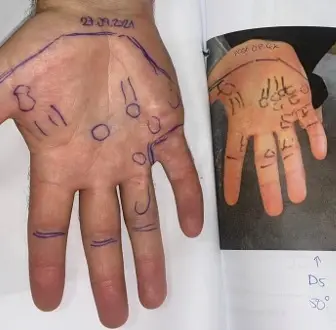
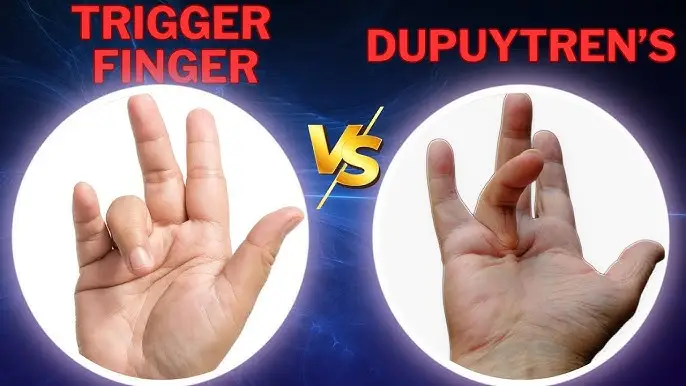
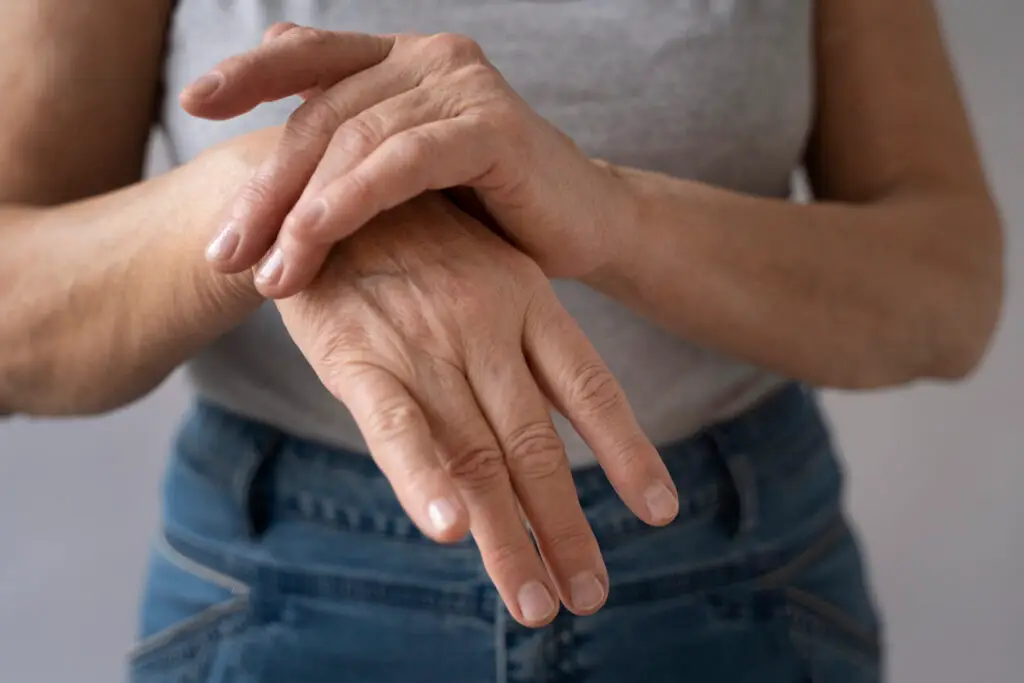
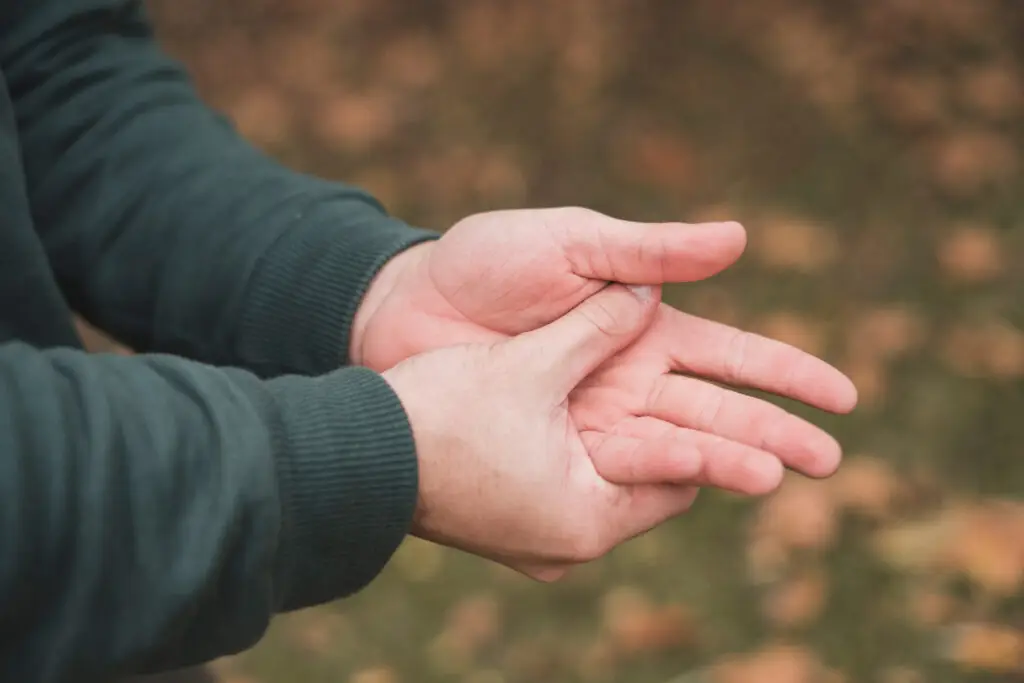
Garrod’s pads—also known as dorsal Dupuytren’s nodules or knuckle pads—can be uncomfortable, cosmetically troubling, and difficult to treat. Recent published data supports what has already been seen in clinical practice: radiotherapy can be highly effective for symptomatic cases. This article reviews the emerging evidence, explains why radiotherapy works for fibroproliferative conditions such as Garrod’s pads and Ledderhose disease, and outlines a practical treatment approach that may allow some patients to achieve good results with just a single treatment phase.

Radiotherapy is effective in 89% of patients with Garrod’s pads (Garrod’s pads are also called dorsal Dupuytren’s nodules or knuckle pads). I’ve been treating Garrod’s pads with radiotherapy for many years and found it to be effective in around 70% of people.
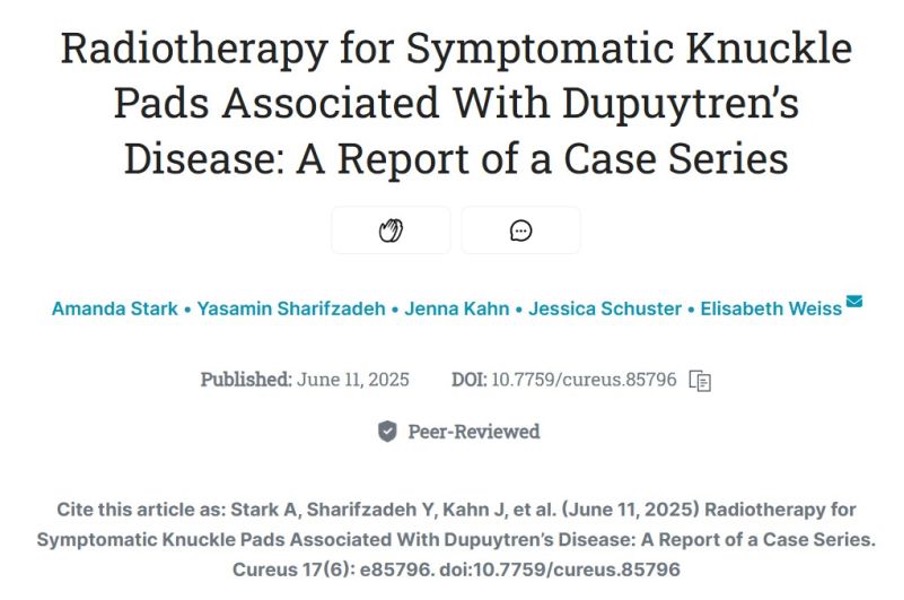
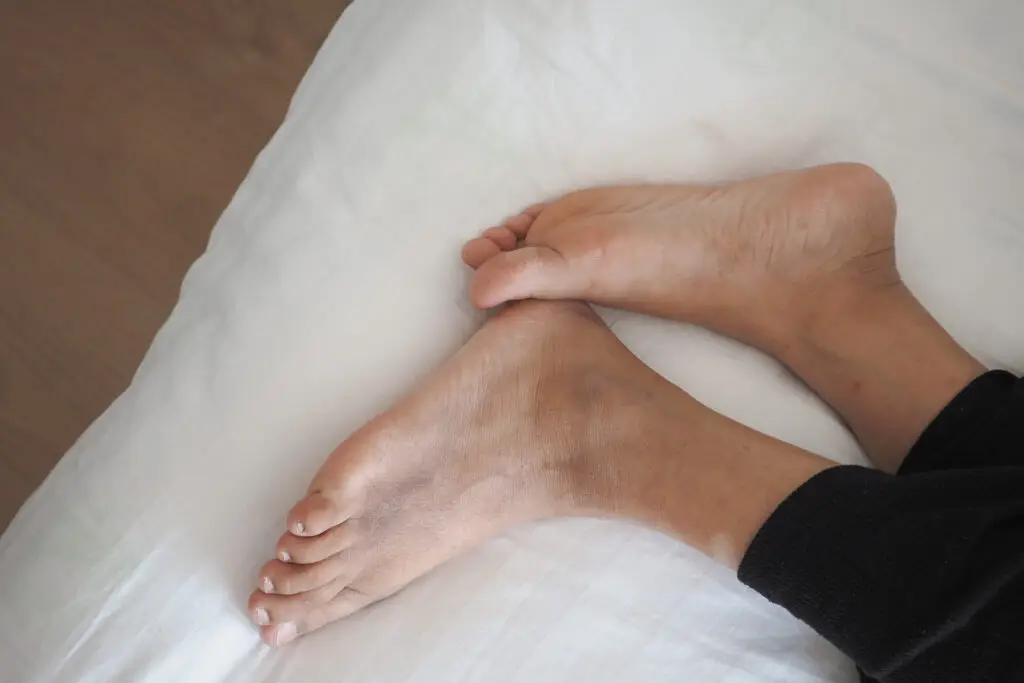
The article below by Amanda Stark and her co-authors is the first publication reflecting something that we are doing routinely. Garrod’s pads are essentially the same biological process as Ledderhose disease, occurring on the knuckles instead of the feet.
But it’s always nice to see real-world practice reflected in the literature. Personally, I use a very slightly different scheme of treatment:
– 15Gy in 5#
– Review at 3 months
– Consider a further 15Gy in 5#
That way, some patients will only need one phase of treatment rather than the full two phases.
Also, it’s clear that steroid injections are generally not helpful. And surgery seems to negatively affect the joint. So radiotherapy seems like a good new standard treatment. we know that radiotherapy for Ledderhose disease is effective at reducing lumps based on recent clinical trials.
Reference: Stark A, Sharifzadeh Y, Kahn J, et al. (June 11, 2025) Radiotherapy for Symptomatic Knuckle Pads Associated With Dupuytren’s Disease: A Report of a Case Series. Cureus 17(6): e85796. doi:10.7759/cureus.85796