If you’re considering radiotherapy for Dupuytren’s or Ledderhose disease and travelling from overseas, this guide explains everything from video consultations and treatment scheduling to planning your stay in London. Learn how Dupuytren’s UK streamlines the process to reduce travel time while maintaining high-quality care.


If you are considering radiotherapy for Dupuytren’s or Ledderhose disease and live outside the UK, you are likely thinking about both the medical side and the practicalities at the same time. What is the treatment, and just as importantly, how would it actually work if you have to travel a long distance?
At Dupuytren’s UK, we have adapted the standard treatment pathway specifically for international patients. The aim is to make the process as streamlined and efficient as possible, while maintaining the same level of care and attention to detail as for UK-based patients.
Why the standard pathway is not ideal for international travel
For patients based in the UK, the usual pathway involves an initial clinic appointment, followed by a gap of around two to three weeks before starting treatment. The first phase then consists of five treatments over one week, followed by a second week of treatment several months later.
For someone travelling from overseas, this creates a problem. One option would be to travel for the consultation, return home, and then come back twice more for treatment. Another option would be to stay in the UK after the consultation and wait to start treatment, but that would typically mean remaining in the UK for around four weeks before even completing the first phase.
For most people, neither of these options is particularly practical.
How Dupuytren’s UK has streamlined the process
To make treatment more manageable, we use a pre-arranged and streamlined pathway for international patients. The key difference is that the initial assessment and decision-making are done before you travel, allowing the in-person visit to focus on confirming the plan and starting treatment without unnecessary delay.
This approach reduces the number of trips required and significantly shortens the time you need to spend in the UK, particularly for the first phase of treatment.
Starting with a video consultation and photographs
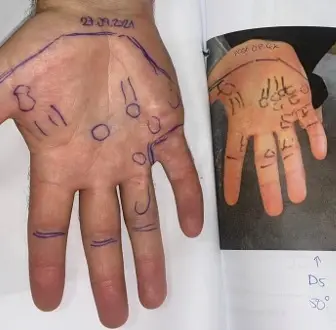
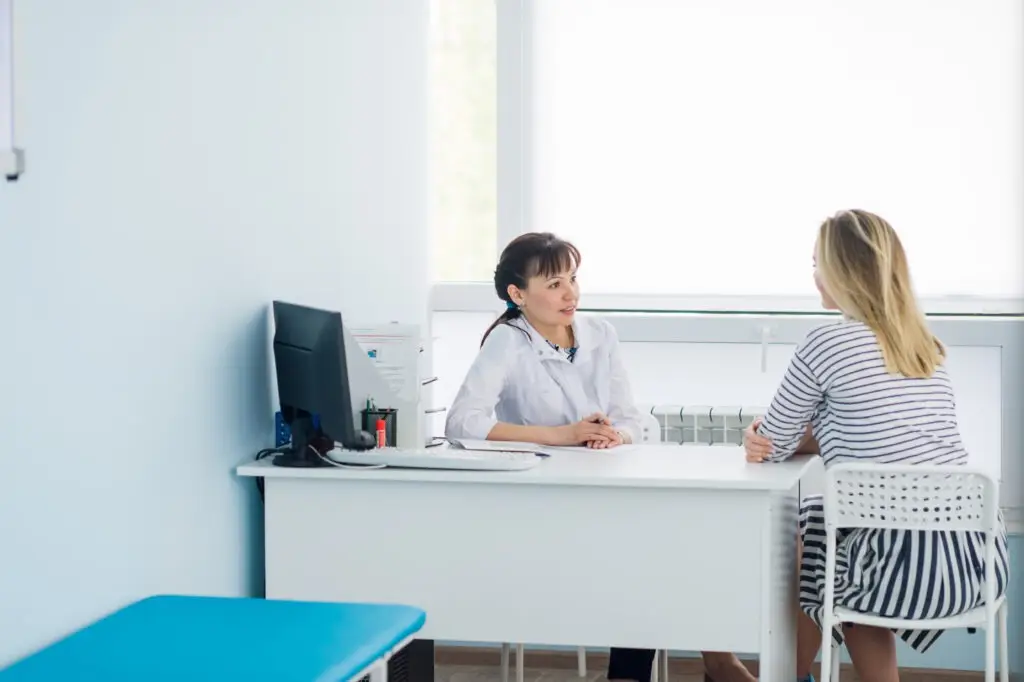
The process begins with a video consultation, supported by good-quality photographs that you send in advance. Photographs are particularly helpful because they provide a clear and consistent view, whereas video quality can vary depending on lighting and camera position.
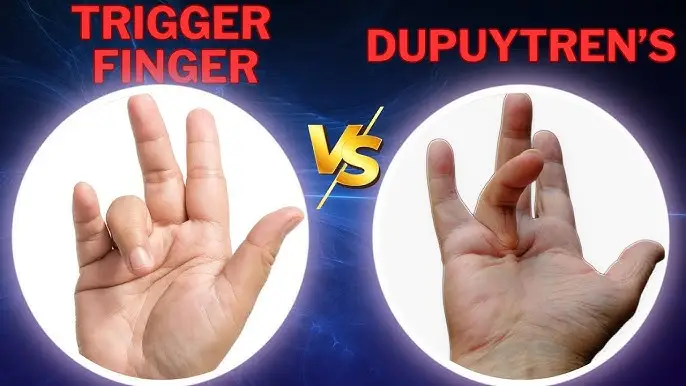
During the consultation, we confirm the diagnosis by looking for the typical features of Dupuytren’s disease, including nodules and cords in the palm. We also assess whether there is any contracture, which means whether the fingers are starting to bend and cannot fully straighten. The degree of contracture is one of the most important factors in deciding whether radiotherapy is appropriate.
Expert Non-Invasive Treatment for Dupuytren’s and Ledderhose Disease Across the UK
Dr Richard Shaffer set up Dupuytren’s UK in April 2011 to provide non-invasive treatments for people who suffer from benign conditions such as Ledderhose disease and early-stage Dupuytren’s contracture in the Guildford area. Today, Dupuytren’s UK offers this service to patients throughout the UK.

What can and cannot be assessed remotely
In most cases, this combination of photographs and video allows a confident decision about treatment. The presence of nodules and cords, along with the overall pattern of the disease, can usually be identified clearly, and the extent of finger straightening can be assessed visually.
Some finer details are harder to judge remotely. For example, very small nodules or a subtle loss of full finger straightening, where a finger does not quite extend as far back as it used to, can be more difficult to detect. These details can influence the exact way treatment is delivered, but they rarely change the overall decision about whether radiotherapy should be offered.
Planning your visit to London
Once it has been established that treatment is appropriate, the next step is to organise your visit. Most international patients are treated in Wimbledon in South West London, and the process is arranged so that everything fits into a single, efficient visit.
Patients do not need to stay right next to the clinic. Many choose to stay in central London, South London, or West London, as transport links are straightforward. As a general guide, it is sensible to stay within about 30 minutes of the centre, or up to an hour at a push.
Getting to the clinic is relatively simple. You can travel to Wimbledon station and then take the 93 bus to Calonne Road, with the treatment centre located just across the road.
What a typical first visit looks like
The first visit is carefully structured so that everything happens within a short period. Patients are usually seen in clinic on a Tuesday, when a detailed in-person examination is carried out and the treatment areas are marked.
Treatment then begins on the Thursday. Each session takes around 10 minutes and is given once per weekday. This means you would typically have treatment on Thursday, Friday, Monday, Tuesday, and Wednesday.
Because of this schedule, most patients can travel home on the Wednesday evening after completing the fifth treatment. In practical terms, if you arrive in the UK on Monday evening, your total stay is around 10 days.
What to expect during your time in the UK
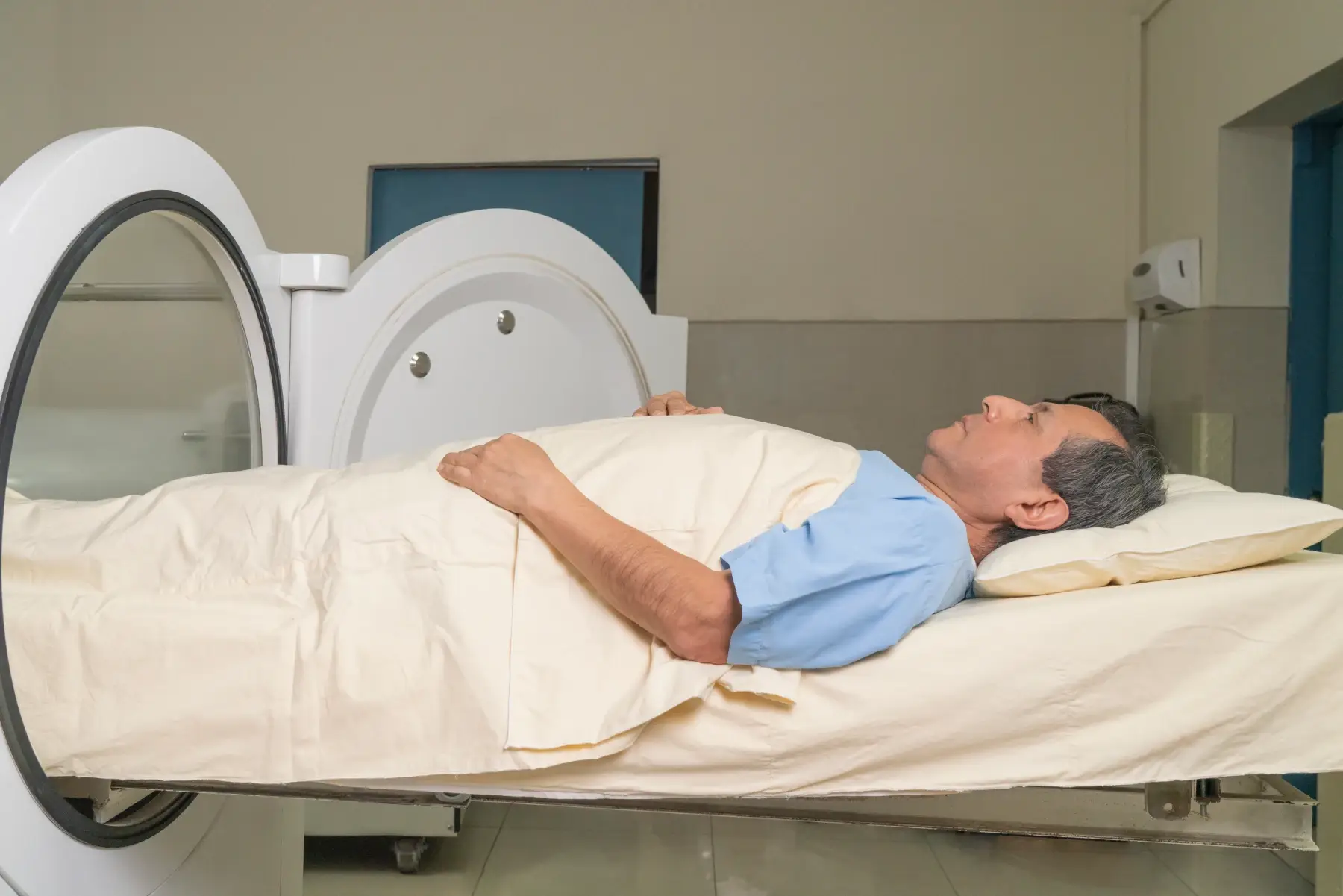
Radiotherapy for Dupuytren’s is a low-dose treatment, and sessions are brief and well tolerated. Importantly, you are not restricted in what you can do between treatments.
Most patients use the time to carry on with normal daily activities, including sightseeing, shopping, or visiting friends and family. The treatment does not make you unwell, and there is no risk to other people, so you can treat the visit much like a normal stay in London.
The second week of treatment
Radiotherapy is usually delivered in two phases, with a gap of around three months between them. There is some flexibility in this timing, and the second phase can typically be given between two and five months after the first.
The second visit is much simpler than the first. You do not need another consultation or mark-up, as everything has already been planned. You simply attend for the five weekday treatments, which means you only need to be in the UK for about one week.
Why this approach works well
This streamlined pathway allows international patients to access treatment without unnecessary travel or prolonged stays. By making decisions in advance and organising the first visit efficiently, it reduces the overall burden while maintaining the same level of clinical care.
It also provides clarity from the outset. By the time you make travel arrangements, the decision about treatment has already been made, and the plan is in place.
Practical points to consider
When planning your visit, it is worth thinking about travel and accommodation in advance. Staying within reasonable distance of Wimbledon makes daily attendance straightforward, and London’s transport system makes it easy to get around.
Many patients find it helpful to combine treatment with a short stay in London, as the daily appointments are brief and leave plenty of free time. This can make the experience more manageable, particularly if you are travelling from further afield.
How to arrange a video consultation
If you are based outside the UK and would like to explore this option, the first step is to arrange a consultation. This can be done by booking an appointment and noting that you would like a video consultation.
From there, we can assess your condition, confirm whether treatment is appropriate, and plan the logistics in a way that works for you.