In this blog, we will discuss the different types of pain and tenderness that can occur in Dupuytren’s disease, why they happen, how they typically change over time, and when treatment may help.


One of the most confusing things for patients with Dupuytren’s disease is being told that “Dupuytren’s isn’t painful” when they are clearly experiencing pain or tenderness in the hand. This often leaves people feeling dismissed or worried that something else must be wrong. In reality, Dupuytren’s disease absolutely can cause discomfort, particularly in the earlier and more active stages.
Pain can happen even before a nodule appears
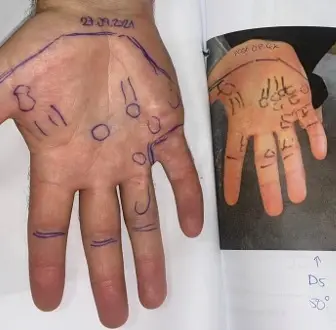
Many patients notice discomfort in the palm before they can feel any obvious lump at all. People describe this in different ways. Some describe a burning sensation, some a stinging sensation, and others simply describe tenderness or irritation in part of the palm.
Then, once the first nodule appears, it can itself be tender for some time. Patients often notice this when they grip objects firmly or press directly on the area.
Tenderness is often more noticeable than constant pain
There is also a slightly confusing difference between how patients and doctors use the words “pain” and “tenderness”. In medical language, tenderness usually means discomfort when pressure is applied to an area. So the hand may hurt when gripping a steering wheel, lifting weights, shaking hands firmly, cutting vegetables with a knife, using tools, or pressing directly on the nodule. Doctors often separate this from pain that occurs spontaneously when the hand is completely at rest.
The problem is that patients understandably still describe tenderness as “pain”, because to them it is pain. So sometimes patients feel frustrated when they are told Dupuytren’s disease is “not painful”, even though daily activities are clearly uncomfortable.
Tightness itself can also become painful
As Dupuytren’s disease progresses, the fingers may gradually lose the ability to fully straighten. At that stage, certain movements that stretch the tight tissue can themselves become uncomfortable. Patients sometimes notice pain when trying to force the fingers backwards, placing the hand flat on a table, or doing yoga positions like “downward dog” that stretch the fingers backwards.
That pain is often simply the mechanical effect of tight tissue being stretched.
Pain is usually not the dominant feature
Although Dupuytren’s disease can certainly be painful or tender, pain is not usually the main long-term feature of the condition. Most patients are more aware of the nodules themselves, the progression of cords, the tightening of the fingers, or the gradual loss of finger movement. So when pain is the overwhelmingly dominant symptom, particularly severe, constant pain, it does make me pause slightly and think carefully about whether something else may be going on.
That doesn’t mean that the symptoms are “not real”. It simply means that the pattern is a bit less typical and needs full assessment.
The pain doesn’t keep worsening endlessly
One fear that many patients have is that once the nodules become painful, the hand will gradually become more and more painful over time. Fortunately, that is not what happens. Tenderness in Dupuytren’s nodules often fluctuates and may become more noticeable for a period of weeks or months before gradually settling down again.
That is important because many people understandably panic when they first notice pain or tenderness. They worry that the discomfort means the disease is rapidly spiralling out of control, when in reality the tenderness often improves naturally over time.
Tenderness often settles naturally
One reassuring thing is that tenderness in new nodules often improves by itself over time. That is one reason why I do not usually rush immediately into treatment the moment a new tender nodule appears. Early tenderness does not necessarily mean the situation is worsening or that urgent treatment is needed.
Worried about pain or tenderness in your hand?
If tenderness when gripping, pressing or stretching the hand is affecting your daily life, it can help to have it assessed properly. Book a consultation with Dr Richard Shaffer to talk through your symptoms and the options that might help.

Sometimes tenderness becomes an important issue
Although pain is not the main issue for most people, there are certainly patients where tenderness becomes genuinely important in day-to-day life. This is particularly true when the painful area sits exactly where pressure or friction repeatedly occurs during work, sport, or hobbies.
I remember treating a guitarist who had a painful Dupuytren’s nodule in the “web space” between the thumb and index finger. That was exactly where he rested the neck of the guitar while playing, so the tender nodule became a major issue for him.
Similarly, chefs, mechanics, weightlifters, golfers, cyclists, racket sport players, and manual workers may all repeatedly press on the same part of the palm throughout the day. In those situations, tenderness may become far more significant than it would be for somebody who barely notices pressure on the area during normal life.
Fear of worsening pain is also important
Another thing that patients often do not say openly at first is that they are worried about what the future holds. Sometimes the tenderness itself is manageable, but people become anxious that the nodules are becoming more active and that the pain will continue increasing over time.
That anxiety is understandable, particularly if somebody has seen relatives develop severe Dupuytren’s disease or has already experienced progression elsewhere in the hand.
Part of the consultation is therefore not simply assessing the physical findings, but also helping patients understand what is likely to happen next and reassuring them that Dupuytren’s disease does not usually become relentlessly more painful over time.
Conservative measures are usually the first step
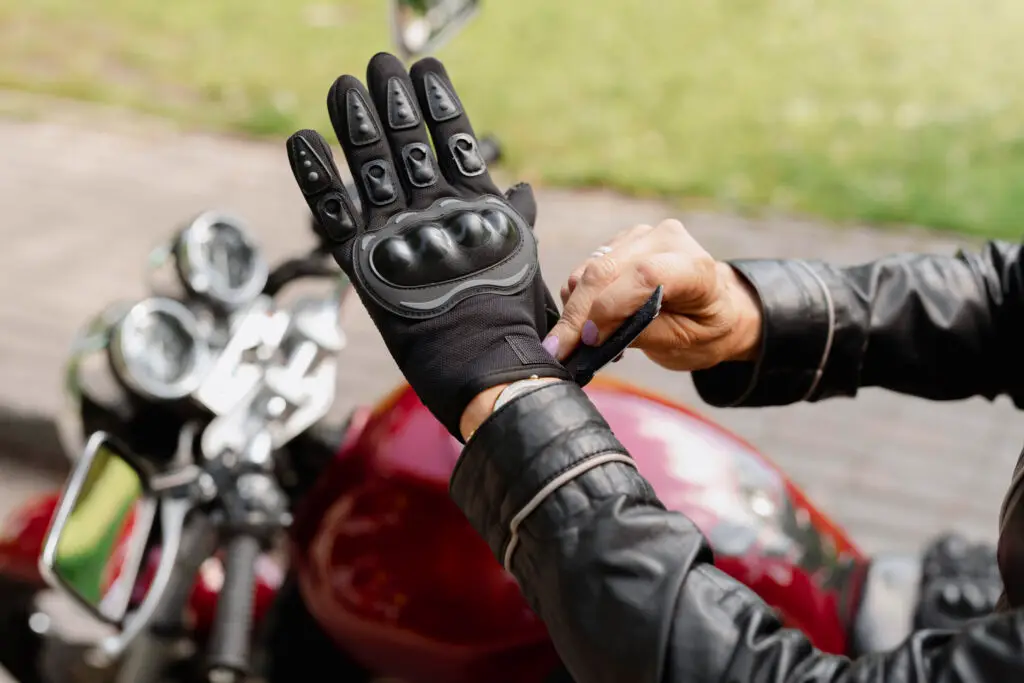
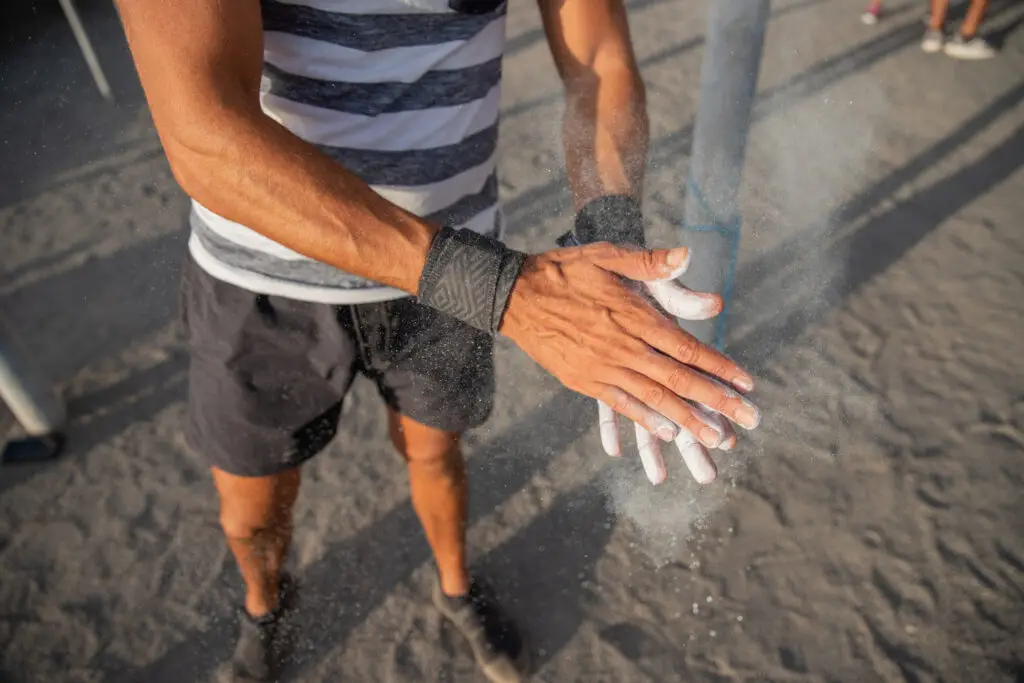
For many people, relatively simple conservative measures are enough. If a particular activity repeatedly irritates the palm, then modifying pressure on the area can help significantly. Sometimes that means changing grip technique, altering sporting equipment, or using protective padding. Some patients use padded gloves, gel-padded cycling gloves, anti-vibration gloves, blister plasters, or wrist straps in the gym to reduce direct pressure on the nodules.
These measures don’t treat the Dupuytren’s disease itself, but they can make daily life much more comfortable.
What about painkillers?
Simple painkillers or anti-inflammatory medication can sometimes help during particularly irritated periods. However, long-term regular use is not ideal, because medications themselves have side effects, particularly anti-inflammatory tablets and stronger painkillers.
For that reason, most people prefer practical measures that reduce pressure on the palm rather than relying heavily on medication.
Can steroid injections help?
Steroid injections are sometimes used for painful Dupuytren’s nodules. The aim is mainly to reduce tenderness and irritation within the nodule itself. Some patients do notice improvement after the injection.
However, many patients find the injections themselves uncomfortable, and the effect is often temporary. There are also limits to how many injections are allowed, because repeated steroid injections can thin the skin and affect the surrounding tissues. For somebody with multiple nodules, injecting all of them may also be impractical.
Is surgery a good option for painful nodules?
Generally not. Surgery is most useful for releasing established finger contractures rather than simply removing painful nodules alone.
The problem is that surgery itself creates trauma within tissues already prone to abnormal scar formation. In some patients, removing one painful nodule may simply stimulate further nodules or scar tissue to develop afterwards.
Some patients are also disappointed by postoperative scarring, particularly if the original problem was mainly tenderness rather than loss of finger movement.
That is why surgeons are often cautious about operating purely for painful nodules without contracture.
How can radiotherapy help?
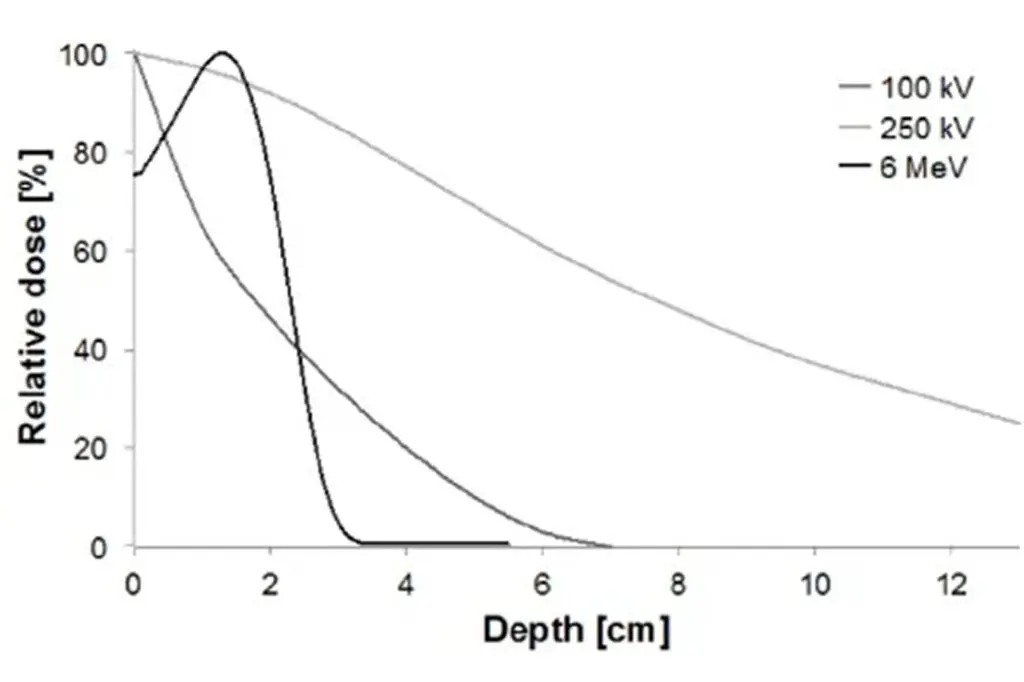
The main aim of radiotherapy in Dupuytren’s disease is to reduce progression and lower the risk of future contracture and surgery. However, radiotherapy can also help relieve tenderness in many patients. In my own practice, I usually quote roughly a 70% chance of improvement in pain or tenderness after treatment.
The improvement in tenderness can be very gradual and may continue evolving for many months after treatment. In some patients, the hand continues settling for up to a year.
The bottom line
Yes, Dupuytren’s disease can be painful or tender, particularly in the earlier active stages. Patients are not imagining the symptoms, and it is understandable that people become frustrated when they are told the condition is “not painful” despite discomfort affecting daily life.
For many people, tenderness settles naturally over time or can be managed with practical measures to reduce pressure on the palm.
However, for some patients, tenderness becomes a significant ongoing problem that interferes with work, hobbies, sport, or everyday activities. In selected cases, radiotherapy can sometimes help reduce both the tenderness and the activity of the nodules themselves.
If you are developing painful nodules, tenderness when gripping objects, or increasing tightness in the hand, you are welcome to get in touch for an assessment and advice about whether radiotherapy may be appropriate.