Radiotherapy is effective for early Dupuytren’s disease, reducing the risk of the disease getting worse and the need for later surgery by more than three times.

Key takeaway:
Low-dose radiotherapy is used in early Dupuytren’s disease to try to stop it progressing to a contracture (a finger fixed in a bent position). In a large German study following patients for an average of eight years, progression and the need for surgery were both around three times lower after radiotherapy. Timing is what matters: the disease needs to be early and active.
Radiotherapy is effective for early Dupuytren’s disease, reducing the risk of the disease getting worse and the need for later surgery by more than three times.
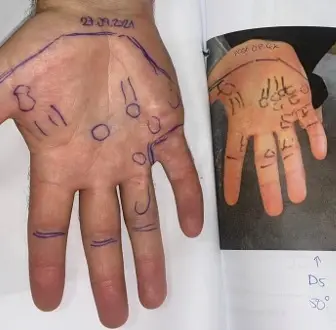
Radiotherapy is mainly used as a preventative treatment, aiming to stop the disease getting worse and forming contractures (fixed bending of the fingers). Some people also find that the nodules become softer or smaller, and that the pain or tenderness can get better.
What does the evidence show?
The most important results come from a large German study of patients with early Dupuytren’s disease. Some patients had radiotherapy, and others did not, and everyone was followed up for an average of eight years.
Outcome at 8 years | Disease progressed | Needed surgery |
|---|---|---|
No radiotherapy | 62% | 30% |
Radiotherapy | 20% | 8% |
You can see from the table that radiotherapy reduced the chance of the disease getting worse or needing surgery by more than three times.
Why do we use radiotherapy for Dupuytren’s disease?
Radiotherapy is used mainly as a preventative treatment, aiming to stop the disease before it gets worse and forms a significant contracture, where the fingers become fixed in a bent position. The problem with getting a contracture is that it can get in the way of doing things like putting your hand in your pocket, putting on gloves, and may poke you in the eye when you wash your face. Once a contracture develops, the only way to straighten it is with a procedure like a needle or surgery, which puts your hand out of action for some time and has a risk of various complications.
You might also notice that things improve after treatment. Nodules may get softer or become smaller, and symptoms such as aching, tenderness or tightness may improve. These changes happen very slowly, and the maximum effect may not be seen until up to a year after the end of the treatment.
How strong is the evidence?
The German study showed a very clear treatment effect: radiotherapy reduced the chance of the disease getting worse or needing surgery by more than three times. It also included a large number of patients and followed them up for a long time, which is important in Dupuytren’s disease because progression can happen slowly over many years.
The study also looked at the outcomes that matter most: whether the disease got worse and whether patients eventually needed surgery. Overall, the results show that radiotherapy substantially reduces the chance of early Dupuytren’s disease progressing to contracture and surgery.
If the results are so good, why is radiotherapy not available more widely?
Given these results, it would be reasonable to think that radiotherapy should be routinely available through the NHS and for everyone who has private medical insurance. You may also wonder why a treatment that can reduce the need for later surgery is not funded more widely.
The reason is that the organisations making funding decisions point to a technical issue with the design of the German study and say that it does not provide the particular level of evidence they need.
Wondering whether radiotherapy is an option for you?
If you've noticed a lump in your palm or a finger that's starting to bend, the question worth answering is whether your Dupuytren's is early enough for radiotherapy to be considered. Dr Richard Shaffer sees patients for assessment at centres across the UK, and you don't need a GP referral to get in touch.

Why the evidence is still debated
To understand why, it helps to know what is considered the gold standard for proving that a treatment works: a randomised controlled trial. In this type of trial, patients are randomly put into either a treatment group or a control (no treatment) group, rather than choosing themselves whether they have treatment or not. If at the end of the study they find that the treated group does better than the non-treated group, then we can be confident that the treatment itself caused the difference in outcome.
In the German study, some patients had radiotherapy, and others didn’t. The patients who didn’t have treatment formed the control group, but they had chosen not to have radiotherapy, rather than being assigned to that group by chance.
Theoretically, this could introduce bias. Bias means that there may have been differences between the treatment and non-treatment groups that affected the results. For example, if the patients who chose radiotherapy had fewer nodules and cords or a weaker family history of Dupuytren’s, they might have been less likely to progress anyway. If that were the case, some of the apparent benefit could be due to differences between the patients rather than whether they had the radiotherapy or not.
Because of this uncertainty, the researchers compared the two groups carefully and found no important differences. The treated and untreated patients were similar in their main risk factors, the extent of their Dupuytren’s disease, their symptoms and their hand function before treatment. This makes it very unlikely that bias explains the much better outcomes seen after radiotherapy.
That is really the key point in the debate. The study showed a large and lasting benefit from radiotherapy, but some organisations still want the extra certainty that comes from a fully randomised trial before they will routinely fund treatment. The disagreement is therefore mainly about how high the bar for proof should be, rather than whether the study showed that radiotherapy was effective.
How does radiotherapy actually work?
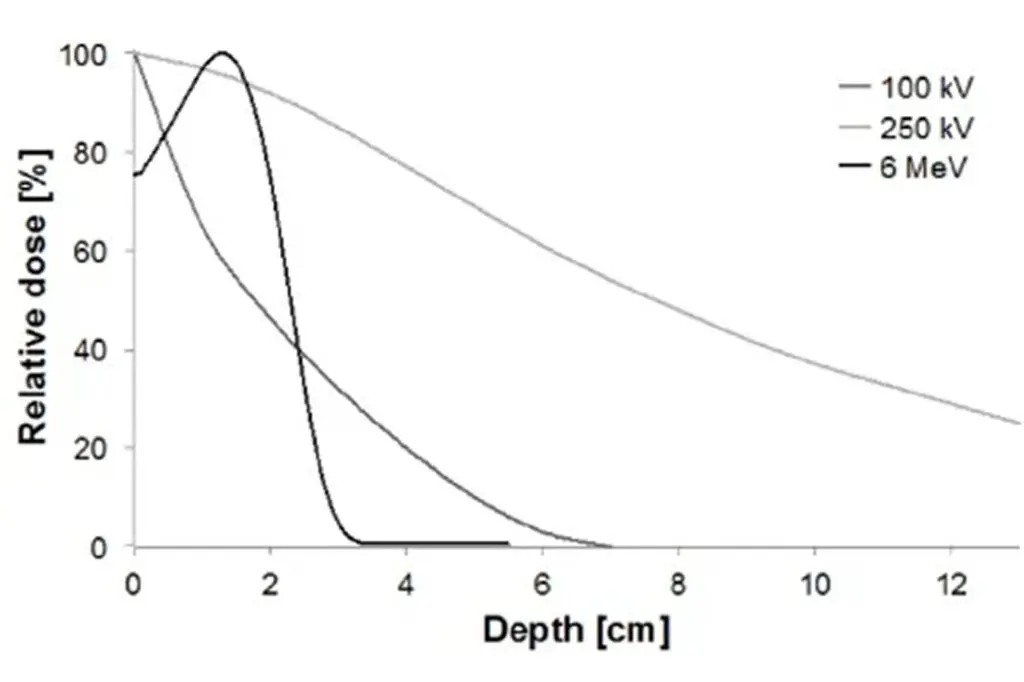
Dupuytren’s disease is a condition where cells called fibroblasts form too much scar-like tissue underneath the skin of the palm and fingers. Those cells are most active in early disease, when nodules and cords are developing, and there is either no contracture or only a very minor one. As the contracture becomes more advanced, the tissue contains fewer active fibroblasts, and instead there’s just mature scar tissue.
Radiotherapy works best in the early phase because it can affect the active fibroblasts, reduce their activity and slow the production of further scar tissue. This can help stop the disease from progressing to a fixed contracture.
The treatment itself uses a low dose and is generally well tolerated, though like any treatment it has possible side effects, which we cover in detail in our article on the safety of radiotherapy for Dupuytren’s.
What does this mean for you?
Dupuytren’s disease is an unpredictable condition. For some people it will stay stable for many years, whilst for others it will continue to get worse, form a contracture and eventually need surgery to straighten the finger. The problem is that it’s impossible to predict who will get worse, how quickly it will happen or how far the disease will go.
Deciding whether to have radiotherapy isn’t just about finding a nodule or cord. It’s all about timing. The disease needs to be early enough so that radiotherapy still has a chance to work, but not too early so that you are treating disease that may never form a contracture.
Not sure if you are in the treatment window?
That’s why an expert assessment can help you work out whether your Dupuytren’s is in the treatment window. If it’s too early, then you may just be able to monitor your hands until things get worse. But if the disease is already active and progressing, radiotherapy can help stop things worsening further and prevent a contracture and the need for surgery.
Patient FAQs
Does radiotherapy work for Dupuytren’s disease?
Yes, in early disease. In a German study that followed patients for an average of eight years, 62% of untreated patients got worse, and 30% went on to need surgery. In the treated group, those figures were 20% and 8%.
Is radiotherapy for Dupuytren’s available on the NHS?
Not routinely. The organisations that make funding decisions consider the current evidence insufficient for routine funding, mainly because patients in the German study chose whether to have treatment rather than being randomly assigned to it.
Will radiotherapy get rid of the lump in my palm?
It is not designed to. Radiotherapy is mainly preventative, aiming to stop the disease progressing to a fixed contracture. Some people do find that nodules become softer or smaller and that aching or tenderness improves, but these changes happen slowly, and the maximum effect may not be seen until up to a year after treatment ends.
Is it too early for me to have radiotherapy?
It can be. Radiotherapy works best while the fibroblasts driving the disease are still active, so the disease needs to be early enough for treatment to work, but not so early that you are treating disease that may never form a contracture. An expert assessment is the way to find out where you sit.